Acacia decurrens
Report an issueBy recorded trees in the inventory.
Black wattle · also Sydney green wattle, Early green wattle, Green wattle
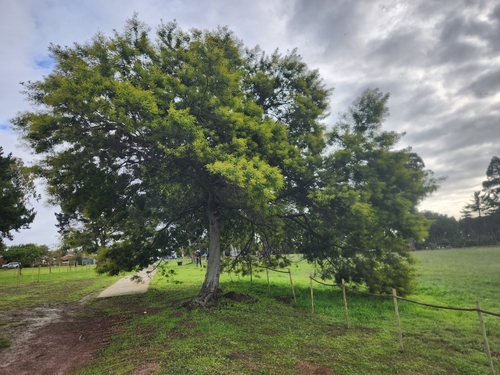
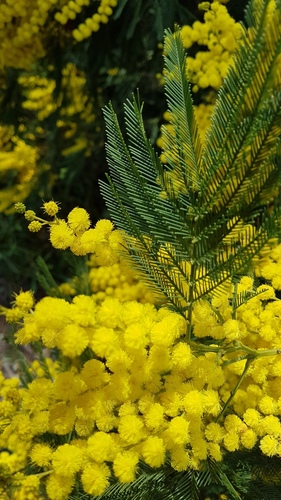
Acacia decurrens is a tall shrub to tree with dark green, bipinnate leaves and spherical heads of golden yellow flowers. It has a pyramidal shape when young, maturing to a broad, open form with blue-green evergreen foliage and furrowed bark. Well-suited for large spaces like parks and gardens, it provides excellent shade and can serve as a windbreak in urban landscapes.
Traits
- Form & size
- FormSpreadingMature height15–50 ftCanopy spread10–25 ft
- Evergreen foliage
- Blooms
- Jun, Jul, Aug, Sep, Oct, Nov
- Lifespan
- 15–50 years
- Fast growth rate
- Sun
- Full sun
- Soil
- Loamy, Sandy, Well-drained, Clay-tolerant
- Low water needs
- High drought tolerance
- Moderate wildlife value
Size sketches use the middle of each recorded range (or the available bound), beside a 6 ft person. Missing dimensions are illustrative.
Trunk diameters across every city: median 9.8 in, mean 12 in, 90th percentile 25 in. Measured at breast height, as published by each inventory.
Where it grows
Cities that list the tree in their inventory, and what % of their named trees it represents.
- 55,0933.8%—29 in
- 1350.03%——
- 340.06%——
- 230.01%—9.0 in
- 180.01%—9.8 in
- 30.00%—3.1 in
No city in this list records planting dates for this species, so age is blank throughout.
Native range
Ecoregions where the species is native.
Temperate Broadleaf & Mixed Forests
- Eastern Australian temperate forests
Other Acacia in the catalogue
31 of the top 2,000 species are in this genus.


