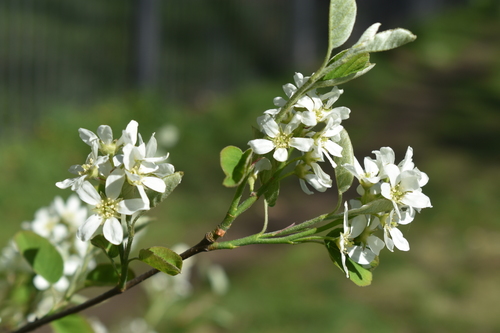
Amelanchier spicata
Low juneberry · also Thicket shadbush, Dwarf serviceberry, Low serviceberry
Report an issue with this species
This very hardy small tree or shrub, native to Eastern North America, produces clusters of white flowers in spring followed by edible reddish-purple berries in summer. It offers significant ecological value by providing nectar for pollinators and fruit for birds and wildlife, and is adaptable to various soil types for urban planting, though it is susceptible to powdery mildew and tends to produce root suckers.
Where it grows
Trees in each city's inventory, with the share of that city's named trees this species accounts for.
- 90.01%17 yr7.6 in
- 60.00%1.8 yr—
- 50.01%—5.9 in
Traits
- Foliage
- Deciduous
- Mature height
- 12–20 ft
- Canopy spread
- 12–15 ft
- Growth rate
- Moderate
- Wildlife value
- High
- Blooms
- Mar, Apr, May
Trunk diameters across every city: median 7.6 in, mean 7.3 in, 90th percentile 9.5 in. Measured at breast height, as published by each inventory.
Native range
Terrestrial ecoregions where this species is native. Trees in the dataset mostly stand well outside it.
Temperate Broadleaf & Mixed Forests
- Eastern Canadian Forest-Boreal transition
- New England-Acadian forests
Other Amelanchier in the catalogue
13 of the top 2,000 species are in this genus.


