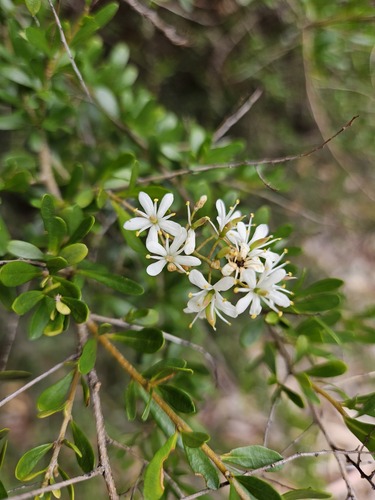
Bursaria spinosa
Australian blackthorn · also Boxthorn, Christmas bush, Prickly box
Report an issue with this species
Bursaria spinosa is a small tree or shrub, reaching up to 10 m (35 ft) high, characterized by fragrant white flowers that bloom particularly in summer. It is a common understorey plant in eucalyptus woodlands and can colonize disturbed areas. This species holds high wildlife value, serving as an important food source for butterflies, moths, and native bees.
Where it grows
Trees in each city's inventory, with the share of that city's named trees this species accounts for.
- 930.06%—1.9 in
No city in this list records planting dates for this species, so age is blank throughout.
Traits
- Mature height
- 32.8 ft
- Wildlife value
- High
- Blooms
- Jan, Feb, Dec
Trunk diameters across every city: median 1.9 in, mean 2.5 in, 90th percentile 3.8 in. Measured at breast height, as published by each inventory.
Native range
Terrestrial ecoregions where this species is native. Trees in the dataset mostly stand well outside it.
Temperate Grasslands, Savannas & Shrublands
- Eastern Australia mulga shrublands
- Southeast Australia temperate savanna
Tropical & Subtropical Moist Broadleaf Forests
- Queensland tropical rain forests
Temperate Broadleaf & Mixed Forests
- Southeast Australia temperate forests
Tropical & Subtropical Grasslands, Savannas & Shrublands
- Brigalow tropical savanna
Other Bursaria in the catalogue
2 of the top 2,000 species are in this genus.
