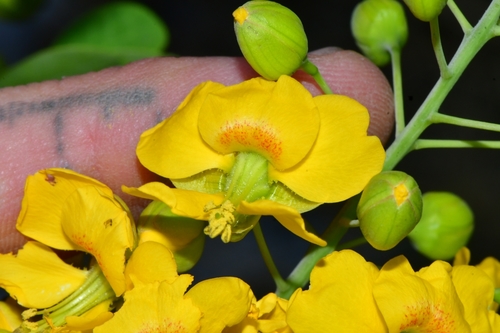
Caesalpinia mexicana
Mexican bird of paradise · also Mexican holdback, Mexican caesalpinia, Tabachín del monte
Report an issue with this species
This large shrub or small tree, formerly Caesalpinia mexicana, boasts delicate, pinnately-compound foliage and vibrant, nectar-rich yellow blooms. Native to dry desert and shrubland biomes of Mexico and Texas, it offers excellent tolerance to heat, drought, and urban pollution, while attracting diverse wildlife.
Where it grows
Trees in each city's inventory, with the share of that city's named trees this species accounts for.
- 1220.46%—3.0 in
No city in this list records planting dates for this species, so age is blank throughout.
Traits
- Form
- Broadleaf
- Foliage
- Evergreen
- Mature height
- 15–25 ft
- Canopy spread
- 12–20 ft
- Growth rate
- Moderate
- Water needs
- Low
- Drought tolerance
- High
- Pollution tolerance
- High
- Wildlife value
- High
- Blooms
- Jun, Jul, Aug, Sep, Oct, Nov
Trunk diameters across every city: median 3.0 in, mean 3.6 in, 90th percentile 6.0 in. Measured at breast height, as published by each inventory.
Native range
Terrestrial ecoregions where this species is native. Trees in the dataset mostly stand well outside it.
Deserts & Xeric Shrublands
- Central Mexican matorral
- Gulf of California xeric scrub
Tropical & Subtropical Dry Broadleaf Forests
- Jalisco dry forests
Other Caesalpinia in the catalogue
3 of the top 2,000 species are in this genus.

