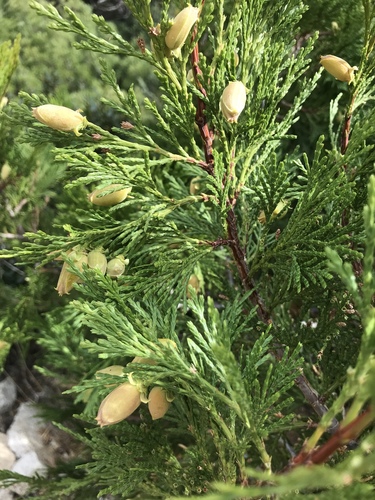
Calocedrus decurrens
Incense cedar · also California incense cedar, Californian incense-cedar, Bastard cedar
Report an issue with this species
This tall tree has a distinct, column-like shape with aromatic, reddish-brown bark and dense, scale-like foliage. It is well-suited for urban environments due to its tolerance of various soil types and moderate drought resistance. It provides excellent habitat for birds and other wildlife, and is often used as a windbreak or privacy screen.
Where it grows
Trees in each city's inventory, with the share of that city's named trees this species accounts for.
- 3490.07%35 yr9.0 in
- 1060.06%—13 in
- 950.01%—3.9 in
- 660.03%—14 in
- 530.04%—14 in
- 260.01%—9.1 in
- 220.02%4.3 yr21 in
- 210.13%3.5 yr1.2 in
- 120.03%—20 in
- 70.00%——
- 10.00%—22 in
- 10.00%——
Traits
- Form
- Columnar
- Foliage
- Evergreen
- Mature height
- 50–90 ft
- Canopy spread
- 10–20 ft
- Growth rate
- Moderate
- Drought tolerance
- Moderate
- Wildlife value
- High
- Blooms
- Mar, Apr, May
Trunk diameters across every city: median 9.0 in, mean 13 in, 90th percentile 29 in. Measured at breast height, as published by each inventory.
Native range
Terrestrial ecoregions where this species is native. Trees in the dataset mostly stand well outside it.
Mediterranean Forests, Woodlands & Scrub
- California coastal sage and chaparral
- California interior chaparral and woodlands
- California montane chaparral and woodlands
Temperate Conifer Forests
- Central Pacific Northwest coastal forests
- Northern California coastal forests
Deserts & Xeric Shrublands
- Baja California desert
Other Calocedrus in the catalogue
2 of the top 2,000 species are in this genus.