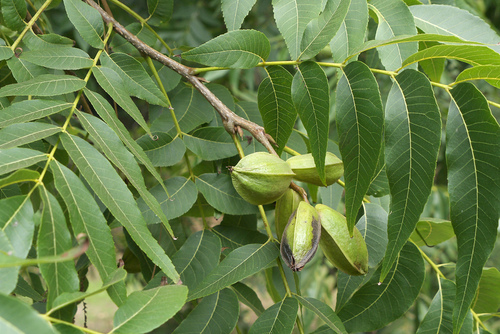
Carya illinoinensis
Pecan · also Pecanier, Nogal morado, Pecan nut
Report an issue with this species
The pecan is a large, deciduous tree with a strong, straight trunk and a wide, spreading canopy. It produces edible nuts that are valued by wildlife and humans. It thrives in well-drained soils, tolerates occasional flooding, and its deep root system helps prevent erosion, making it suitable for parks and large landscapes.
Where it grows
Trees in each city's inventory, with the share of that city's named trees this species accounts for.
- 2630.06%36 yr7.5 in
- 340.01%—13 in
- 320.01%3.8 yr9.8 in
- 320.12%—3.0 in
- 310.01%—3.0 in
- 180.01%10 yr4.5 in
- 170.01%0.5 yr2.0 in
- 160.01%—2.0 in
- 100.00%—12 in
- 70.00%—12 in
- 50.00%—3.1 in
- 40.00%——
- 10.00%—9.3 in
- 10.00%—2.0 in
- 10.00%—3.0 in
Traits
- Form
- Spreading
- Foliage
- Deciduous
- Mature height
- 50–60 ft
- Canopy spread
- 70 ft
- Growth rate
- Fast
- Wildlife value
- Moderate
- Blooms
- Mar, Apr, May
Trunk diameters across every city: median 7.5 in, mean 9.8 in, 90th percentile 18 in. Measured at breast height, as published by each inventory.
Native range
Terrestrial ecoregions where this species is native. Trees in the dataset mostly stand well outside it.
Temperate Grasslands, Savannas & Shrublands
- Central US forest-grasslands transition
- Central-Southern US mixed grasslands
- Texas blackland prairies
Temperate Broadleaf & Mixed Forests
- East Central Texas forests
- Mississippi lowland forests
Other Carya in the catalogue
8 of the top 2,000 species are in this genus.


