#1433 most planted
Cocos nucifera
Coconut palm · also Coconut, Niu, Iru
PalmEvergreen
43
trees mapped
0.00%
of all named trees
3
cities
9.0 in
median trunk (23 cm, 38 measured)
35 yr
median age (49% have a planting date)
Report an issue with this species
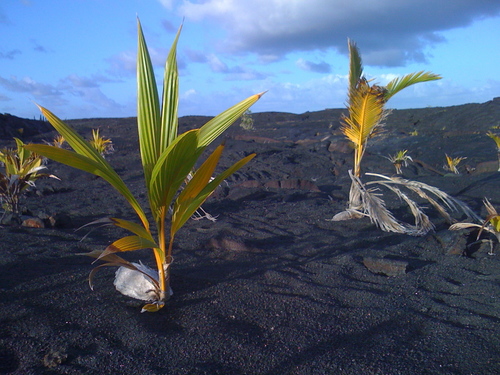
The coconut palm is a tall tree known for its large, hard fruits and pinnate leaves. It provides food, fuel, and building materials, thriving in humid coastal lowlands with abundant sunlight. While widely cultivated, its intolerance to cold and potentially falling coconuts are key considerations for urban planting.
Where it grows
Trees in each city's inventory, with the share of that city's named trees this species accounts for.
- 210.00%35 yr12 in
- 200.01%—7.7 in
- 20.00%—26 in
Traits
- Form
- Palm
- Foliage
- Evergreen
- Mature height
- 50 ft
- Canopy spread
- 15–25 ft
- Growth rate
- Moderate
- Sun
- Full sun
- Water needs
- High
- Drought tolerance
- Moderate
- Tolerates
- coastal, salt
- Blooms
- Mar, Apr, May
Trunk diameters across every city: median 9.0 in, mean 12 in, 90th percentile 19 in. Measured at breast height, as published by each inventory.
Native range
Terrestrial ecoregions where this species is native. Trees in the dataset mostly stand well outside it.
Tropical & Subtropical Moist Broadleaf Forests
- Admiralty Islands lowland rain forests
- Banda Sea Islands moist deciduous forests
- New Britain-New Ireland lowland rain forests
- Northern New Guinea lowland rain and freshwater swamp forests
- Southern New Guinea freshwater swamp forests
- Southern New Guinea lowland rain forests
- Andaman Islands rain forests
- Christmas and Cocos Islands tropical forests
- South China Sea Islands