Cotinus coggygria
European smoketree · also Eurasian smoketree, Smoke tree, Smoke bush
Report an issue with this species
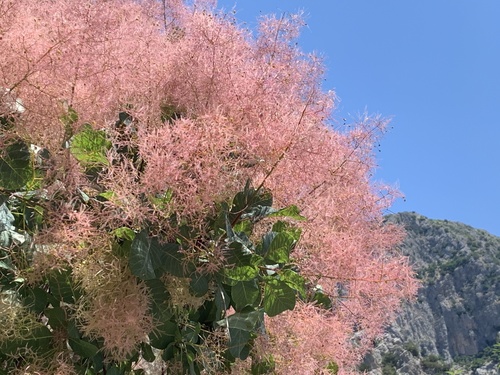
This tree is known for its striking, smoky plumes of flowers and leaves that turn vibrant shades of red, orange, and yellow in the fall. It has a rounded, bushy shape and is a hardy option, tolerating various soil types and conditions. It requires minimal maintenance, making it an excellent choice for urban settings.
Where it grows
Trees in each city's inventory, with the share of that city's named trees this species accounts for.
- 2040.07%—3.0 in
- 790.01%—0.6 in
- 720.01%—6.0 in
- 670.03%—4.4 in
- 360.05%—1.6 in
- 350.01%—3.9 in
- 320.02%0.6 yr3.0 in
- 300.03%23 yr11 in
- 180.04%—4.1 in
- 150.00%28 yr7.9 in
- 80.00%—5.0 in
- 50.00%27 yr9.8 in
- 50.02%—15 in
- 40.00%—3.3 in
- 30.00%—1.5 in
- 30.02%—9.4 in
- 30.03%—2.0 in
- 20.00%——
- 10.00%—3.9 in
Traits
- Form
- Broadleaf
- Foliage
- Deciduous
- Mature height
- 10–15 ft
- Canopy spread
- 10–20 ft
- Growth rate
- Moderate
- Drought tolerance
- High
- Blooms
- Mar, Apr, May
Trunk diameters across every city: median 3.0 in, mean 5.3 in, 90th percentile 10 in. Measured at breast height, as published by each inventory.
Native range
Terrestrial ecoregions where this species is native. Trees in the dataset mostly stand well outside it.
Temperate Broadleaf & Mixed Forests
- Balkan mixed forests
- Caucasus mixed forests
- Central China Loess Plateau mixed forests
- Central European mixed forests
- Western European broadleaf forests
Deserts & Xeric Shrublands
- South Iran Nubo-Sindian desert and semi-desert
Other Cotinus in the catalogue
3 of the top 2,000 species are in this genus.

