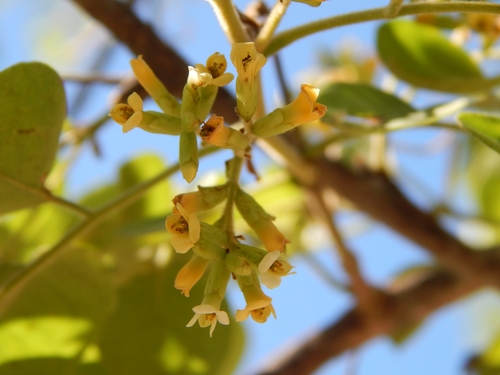
Dalbergia sissoo
Indian rosewood · also Shisham, North Indian rosewood, Sissoo
Report an issue with this species
Dalbergia sissoo, also known as Indian Rosewood or Shisham, is a fast-growing, hardy, deciduous tree native to the Indian subcontinent. It features a dense canopy of glossy leaves, a crooked trunk, and produces small, fragrant white or pink flowers. This robust tree is adaptable to various soil types and offers good drought resistance, making it suitable for urban landscapes.
Where it grows
Trees in each city's inventory, with the share of that city's named trees this species accounts for.
- 1,2124.6%—9.0 in
- 270.02%—17 in
- 110.00%——
No city in this list records planting dates for this species, so age is blank throughout.
Traits
- Foliage
- Deciduous
- Mature height
- 45–60 ft
- Canopy spread
- 30–40 ft
- Growth rate
- Fast
- Water needs
- Moderate
- Drought tolerance
- High
- Wildlife value
- High
- Blooms
- Mar, Apr, May
Trunk diameters across every city: median 9.0 in, mean 9.7 in, 90th percentile 16 in. Measured at breast height, as published by each inventory.
Native range
Terrestrial ecoregions where this species is native. Trees in the dataset mostly stand well outside it.
Tropical & Subtropical Dry Broadleaf Forests
- Chhota-Nagpur dry deciduous forests
- East Deccan dry-evergreen forests
- Khathiar-Gir dry deciduous forests
- Narmada Valley dry deciduous forests
- North Deccan dry deciduous forests
- South Deccan Plateau dry deciduous forests
Tropical & Subtropical Moist Broadleaf Forests
- East Deccan moist deciduous forests
Deserts & Xeric Shrublands
- Registan-North Pakistan sandy desert