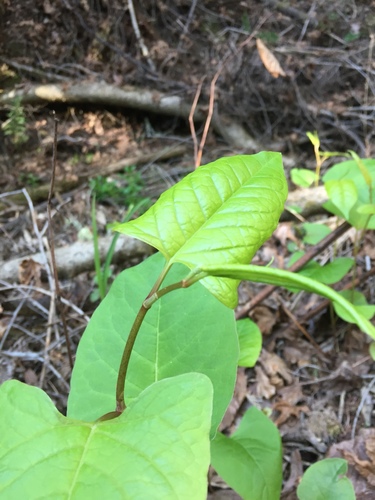
Fallopia japonica
Japanese knotweed · also Asian knotweed
Report an issue with this species
Reynoutria japonica, also known as Japanese knotweed, is an herbaceous perennial plant native to East Asia. It is considered an invasive species in many parts of the world. Despite its invasive nature, it is popular with beekeepers and its young stems are edible.
Where it grows
Trees in each city's inventory, with the share of that city's named trees this species accounts for.
- 1280.01%—0.3 in
No city in this list records planting dates for this species, so age is blank throughout.
Traits
- Foliage
- Deciduous
- Roots
- Invasive
- Wildlife value
- High
Trunk diameters across every city: median 0.3 in, mean 0.3 in, 90th percentile 0.5 in. Measured at breast height, as published by each inventory.
Native range
Terrestrial ecoregions where this species is native. Trees in the dataset mostly stand well outside it.
Temperate Broadleaf & Mixed Forests
- Central China Loess Plateau mixed forests
- Central Korean deciduous forests
- Northeast China Plain deciduous forests
- Southern Korea evergreen forests
Tropical & Subtropical Moist Broadleaf Forests
- South Taiwan monsoon rain forests