Hymenosporum flavum
Native frangipani · also Queensland frangipani, Sweetshade
Report an issue with this species
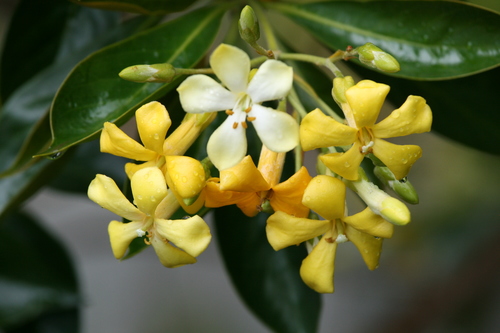
Hymenosporum flavum, also known as Native Frangipani, is an evergreen tree noted for its fragrant yellow flowers that turn cream, and dark green, glossy leaves. It features a slender, upright trunk and provides ample shade, thriving in full sun and well-drained soils. This low-maintenance species attracts birds and pollinators, making it a versatile and biodiverse choice for urban landscapes.
Where it grows
Trees in each city's inventory, with the share of that city's named trees this species accounts for.
- 3320.07%29 yr4.5 in
- 1350.10%2.3 yr3.0 in
- 740.05%—1.9 in
Traits
- Foliage
- Evergreen
- Mature height
- 20–50 ft
- Canopy spread
- 15–20 ft
- Growth rate
- Fast
- Sun
- Full sun
- Soil
- Well-drained
- Water needs
- Moderate
- Drought tolerance
- Moderate
- Wildlife value
- Moderate
- Blooms
- Mar, Apr, May, Jun, Jul, Aug
Trunk diameters across every city: median 3.0 in, mean 4.8 in, 90th percentile 9.0 in. Measured at breast height, as published by each inventory.
Native range
Terrestrial ecoregions where this species is native. Trees in the dataset mostly stand well outside it.
Tropical & Subtropical Moist Broadleaf Forests
- Central Range Papuan montane rain forests
- Northern New Guinea lowland rain and freshwater swamp forests
- Northern New Guinea montane rain forests
- Queensland tropical rain forests
- Southern New Guinea freshwater swamp forests
- Southern New Guinea lowland rain forests
Temperate Broadleaf & Mixed Forests
- Southeast Australia temperate forests
Other Hymenosporum in the catalogue
2 of the top 2,000 species are in this genus.
