#704 most planted
Liquidambar
Sweetgum · also Star gum, Gum, Redgum
BroadleafDeciduous
600
trees mapped
0.01%
of all named trees
9
cities
4.9 in
median trunk (12 cm, 351 measured)
5.8 yr
median age (55% have a planting date)
Report an issue with this species
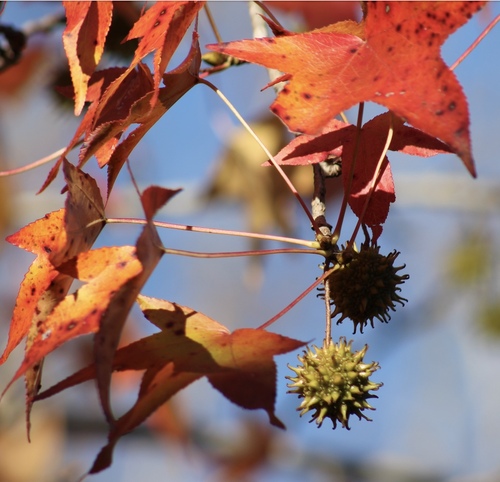
Liquidambar species are decorative deciduous trees known for their striking autumn coloration. They are used for ornamental purposes and in the wood industry. Some species have vigorous root systems that can damage pavement and produce "gum balls" that create maintenance issues.
Where it grows
Trees in each city's inventory, with the share of that city's named trees this species accounts for.
- 3140.21%5.8 yr12 in
- 1140.01%—1.6 in
- 1060.02%5.3 yr3.1 in
- 360.02%—7.0 in
- 120.01%—6.0 in
- 60.00%—9.8 in
- 50.01%6.8 yr—
- 40.00%——
- 30.02%—19 in
Traits
- Form
- Broadleaf
- Foliage
- Deciduous
- Mature height
- 20–60 ft
- Growth rate
- Moderate
- Soil
- Moist
- Water needs
- Moderate
- Roots
- Invasive
- Blooms
- Mar, Apr, May
Trunk diameters across every city: median 4.9 in, mean 7.0 in, 90th percentile 16 in. Measured at breast height, as published by each inventory.
Native range
Terrestrial ecoregions where this species is native. Trees in the dataset mostly stand well outside it.
Temperate Broadleaf & Mixed Forests
- East Central Texas forests
- Mississippi lowland forests
- Northeast US Coastal forests
- Central Anatolian steppe and woodlands
- Central China Loess Plateau mixed forests
- Northeast China Plain deciduous forests
Temperate Grasslands, Savannas & Shrublands
- Southeast US conifer savannas
- Southeast US mixed woodlands and savannas
Tropical & Subtropical Moist Broadleaf Forests
- Central American Atlantic moist forests
- Central American montane forests
Tropical & Subtropical Dry Broadleaf Forests
- Central American dry forests
Tropical & Subtropical Coniferous Forests
- Central American pine-oak forests
Other Liquidambar in the catalogue
6 of the top 2,000 species are in this genus.


