Ostrya
Hop-hornbeam · also Hophornbeam, Ironwood, European hop hornbeam
Report an issue with this species
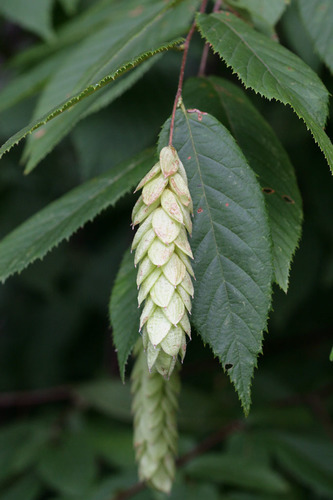
Ostrya trees, commonly known as hop-hornbeams or ironwoods, feature a conical or irregular crown with scaly, rough bark and birch-like leaves. They are native to regions across southern Europe, southwest and eastern Asia, and North and Central America, providing food for various insect larvae. Their very hard wood and slow growth rate make them suitable for certain urban settings, though some species are sensitive to drought and urban pollution.
Where it grows
Trees in each city's inventory, with the share of that city's named trees this species accounts for.
- 110.00%—0.5 in
- 40.00%—3.9 in
- 40.01%——
- 30.00%——
No city in this list records planting dates for this species, so age is blank throughout.
Traits
- Foliage
- Deciduous
- Mature height
- 20–50 ft
- Canopy spread
- 25–70 ft
- Growth rate
- Slow
- Soil
- Well-drained
- Wildlife value
- High
- Blooms
- Mar, Apr, May
Trunk diameters across every city: median 1.0 in, mean 1.8 in, 90th percentile 4.3 in. Measured at breast height, as published by each inventory.
Native range
Terrestrial ecoregions where this species is native. Trees in the dataset mostly stand well outside it.
Temperate Broadleaf & Mixed Forests
- Mississippi lowland forests
- Western Great Lakes forests
- Balkan mixed forests
- Caucasus mixed forests
- Western European broadleaf forests
Temperate Grasslands, Savannas & Shrublands
- Central US forest-grasslands transition
- Central Tallgrass prairie
- Central-Southern US mixed grasslands
- Northern Tallgrass prairie
Temperate Conifer Forests
- Northern Anatolian conifer and deciduous forests
Other Ostrya in the catalogue
4 of the top 2,000 species are in this genus.


