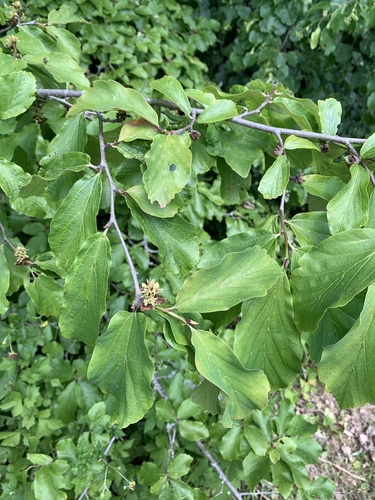
Parrotia persica
Persian ironwood · also Persian parrotia
Report an issue with this species
This deciduous tree features vibrant, multi-seasonal foliage, with glossy green leaves turning to brilliant reds, oranges, and yellows in fall, complemented by peeling bark. Native to the Caspian region and Alborz mountains of Iran and Azerbaijan, it produces small red flowers in late winter. It is a low-maintenance, moderately sized tree adaptable to various soil types, making it an excellent choice for urban landscapes.
Where it grows
Trees in each city's inventory, with the share of that city's named trees this species accounts for.
- 3,0031.6%—3.0 in
- 1,5340.14%—0.8 in
- 7650.33%—3.1 in
- 4660.06%—4.0 in
- 4422.8%5.7 yr3.9 in
- 3770.13%15 yr5.9 in
- 3080.88%—2.8 in
- 2880.15%6.7 yr2.0 in
- 1810.24%2.8 yr2.0 in
- 1790.04%7.8 yr2.9 in
- 1150.04%—3.0 in
- 660.06%11 yr7.8 in
- 640.05%1.4 yr3.0 in
- 180.15%14 yr2.0 in
- 140.06%—2.4 in
- 120.00%2.1 yr2.0 in
- 120.02%7.8 yr—
- 10.00%—1.2 in
- 10.00%—2.4 in
- 10.00%——
Traits
- Form
- Broadleaf
- Foliage
- Deciduous
- Mature height
- 15–40 ft
- Canopy spread
- 15–35 ft
- Growth rate
- Moderate
- Water needs
- Moderate
- Blooms
- Feb, Mar
Trunk diameters across every city: median 3.0 in, mean 3.9 in, 90th percentile 7.5 in. Measured at breast height, as published by each inventory.
Native range
Terrestrial ecoregions where this species is native. Trees in the dataset mostly stand well outside it.
Temperate Broadleaf & Mixed Forests
- Caspian Hyrcanian mixed forests
- Caucasus mixed forests
Temperate Conifer Forests
- Elburz Range forest steppe