#1724 most planted
Photinia villosa
Christmas berry · also Oriental photinia, Oriental photina, Villose photina
BroadleafEvergreen
21
trees mapped
0.00%
of all named trees
2
cities
14 in
median trunk (35 cm, 21 measured)
16 yr
median age (95% have a planting date)
Report an issue with this species
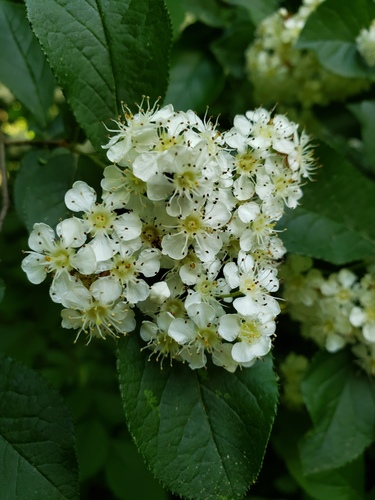
This species is a shrub or small tree, noted for its glossy green leaves, delicate white flowers in spring, and bright red fruit that persists into winter. Its manageable size and seasonal interest make it suitable for small urban spaces.
Where it grows
Trees in each city's inventory, with the share of that city's named trees this species accounts for.
- 200.02%16 yr14 in
- 10.00%—4.0 in
Traits
- Form
- Broadleaf
- Foliage
- Evergreen
- Mature height
- 15–20 ft
- Canopy spread
- 10–15 ft
- Growth rate
- Fast
- Sun
- Full sun, Part shade
- Soil
- Well-drained, Acidic
- Water needs
- Moderate
- Drought tolerance
- Moderate
- Wildlife value
- High
- Blooms
- Mar, Apr, May
Trunk diameters across every city: median 14 in, mean 13 in, 90th percentile 17 in. Measured at breast height, as published by each inventory.
Native range
Terrestrial ecoregions where this species is native. Trees in the dataset mostly stand well outside it.
Temperate Broadleaf & Mixed Forests
- Eastern Himalayan broadleaf forests
- Central China Loess Plateau mixed forests
- Central Korean deciduous forests
- Northeast China Plain deciduous forests
- Southern Korea evergreen forests
Temperate Conifer Forests
- Eastern Himalayan subalpine conifer forests
Other Photinia in the catalogue
6 of the top 2,000 species are in this genus.


