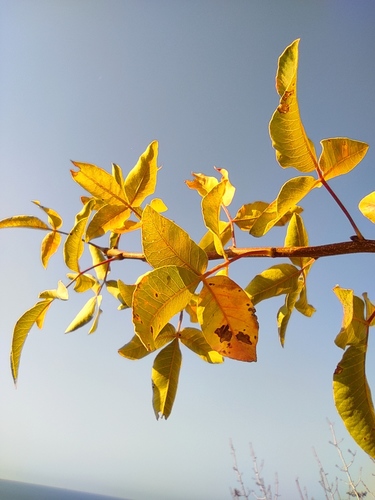
Pistacia atlantica
Mt. Atlas mastic tree · also Atlas pistachio, Atlantic pistacio, Atlantic terebinth
Report an issue with this species
Pistacia atlantica is a hardy deciduous tree native to North Africa, thriving in arid and semi-arid environments with rocky soils. It features pinnately compound leaves and bears dioecious flowers, relying on wind for pollination. It is valued as an ornamental species and plays an important role in reforestation initiatives.
Where it grows
Trees in each city's inventory, with the share of that city's named trees this species accounts for.
- 5532.1%—4.0 in
- 120.00%36 yr7.5 in
Traits
- Foliage
- Deciduous
- Mature height
- 40–60 ft
- Canopy spread
- 30–50 ft
- Soil
- Rocky soils
- Water needs
- Low
- Drought tolerance
- High
- Wildlife value
- Moderate
- Blooms
- Mar, Apr, May
Trunk diameters across every city: median 4.0 in, mean 4.9 in, 90th percentile 10 in. Measured at breast height, as published by each inventory.
Native range
Terrestrial ecoregions where this species is native. Trees in the dataset mostly stand well outside it.
Deserts & Xeric Shrublands
- East Arabian fog shrublands and sand desert
- North Arabian desert
- North Arabian highland shrublands
- Registan-North Pakistan sandy desert
- South Iran Nubo-Sindian desert and semi-desert
Mediterranean Forests, Woodlands & Scrub
- Aegean and Western Turkey sclerophyllous and mixed forests
- Canary Islands dry woodlands and forests
- Cyprus Mediterranean forests
Temperate Broadleaf & Mixed Forests
- Caucasus mixed forests
Temperate Conifer Forests
- East Afghan montane conifer forests
Montane Grasslands & Shrublands
- Kuh Rud and Eastern Iran montane woodlands
Other Pistacia in the catalogue
3 of the top 2,000 species are in this genus.

