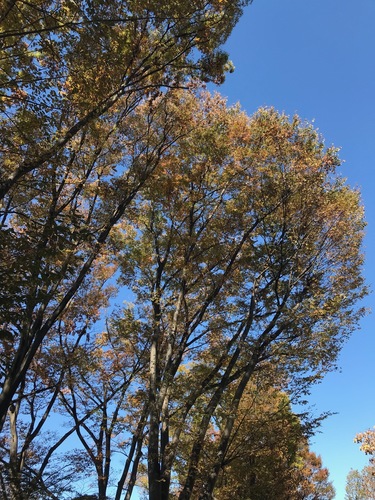
Zelkova serrata
Zelkova serrata · also Japanese zelkova, Japanese elm, Keyaki
Report an issue with this species
This tree is known for its graceful, vase-like shape and attractive bark that peels away in patches to reveal a mosaic of colors. Its leaves are small, serrated, and turn a stunning array of yellow, orange, and red in the fall. It thrives in urban environments, tolerating pollution and compacted soil well, and its deep root system reduces infrastructure damage.
Where it grows
Trees in each city's inventory, with the share of that city's named trees this species accounts for.
- 32,9084.5%—9.0 in
- 11,8495.2%—16 in
- 6,7133.4%10 yr10 in
- 2,9922.6%—8.0 in
- 1,5420.33%36 yr18 in
- 1,0360.64%—5.5 in
- 8620.13%—2.4 in
- 7900.07%—1.3 in
- 6980.38%—3.0 in
- 5970.26%—3.8 in
- 4460.17%—6.3 in
- 4110.13%—3.0 in
- 3790.51%3.8 yr2.0 in
- 3650.11%2.3 yr2.0 in
- 3130.11%6.8 yr5.9 in
- 2690.06%3.8 yr2.5 in
- 1950.26%5.8 yr1.6 in
- 1940.55%—4.7 in
- 1780.13%1.1 yr3.0 in
- 1451.2%2.8 yr4.0 in
- 820.52%4.6 yr2.0 in
- 750.05%—3.8 in
- 700.16%—2.8 in
- 240.05%—4.9 in
- 190.08%—13 in
- 110.02%7.8 yr—
- 60.05%—7.9 in
- 10.00%—2.0 in
Traits
- Form
- Spreading
- Foliage
- Deciduous
- Mature height
- 50–70 ft
- Canopy spread
- 50–65 ft
- Growth rate
- Fast
- Sun
- Full sun, Part shade
- Water needs
- Moderate
- Pollution tolerance
- High
- Roots
- Non-invasive
Trunk diameters across every city: median 10 in, mean 11 in, 90th percentile 20 in. Measured at breast height, as published by each inventory.
Native range
Terrestrial ecoregions where this species is native. Trees in the dataset mostly stand well outside it.
Temperate Broadleaf & Mixed Forests
- Central China Loess Plateau mixed forests
- Central Korean deciduous forests
- Northeast China Plain deciduous forests
- Southern Korea evergreen forests
Tropical & Subtropical Moist Broadleaf Forests
- South Taiwan monsoon rain forests
Other Zelkova in the catalogue
3 of the top 2,000 species are in this genus.

