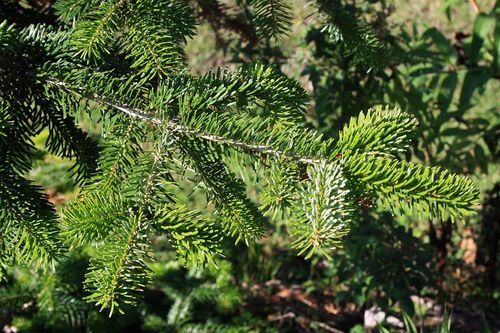
Abies nordmanniana
Nordmann fir · also Caucasian fir, Kazazdagi fir, Nordmann christmastree
Report an issue with this species
This fir species is known for its distinctive peeling bark, revealing cream to cinnamon colors, and a pyramidal shape when young, maturing to a more rounded form. Native to the mountains south and east of the Black Sea, it thrives in wet conditions at elevations of 900–2,200 m. It is a popular choice for urban landscapes due to its moderate growth rate, excellent shade, tolerance to various soil types, and pest resistance.
Where it grows
Trees in each city's inventory, with the share of that city's named trees this species accounts for.
- 240.01%—5.1 in
- 200.02%18 yr34 in
- 160.00%—3.5 in
- 150.01%22 yr4.9 in
- 140.00%24 yr8.3 in
- 90.02%15 yr—
- 50.00%—20 in
- 30.00%—2.0 in
- 10.01%——
Traits
- Form
- Conifer
- Foliage
- Evergreen
- Mature height
- 30–80 ft
- Canopy spread
- 20 ft
- Growth rate
- Moderate
- Wildlife value
- Moderate
- Blooms
- Mar, Apr, May
Trunk diameters across every city: median 8.8 in, mean 15 in, 90th percentile 39 in. Measured at breast height, as published by each inventory.
Native range
Terrestrial ecoregions where this species is native. Trees in the dataset mostly stand well outside it.
Temperate Broadleaf & Mixed Forests
- Caucasus mixed forests
Other Abies in the catalogue
20 of the top 2,000 species are in this genus.


