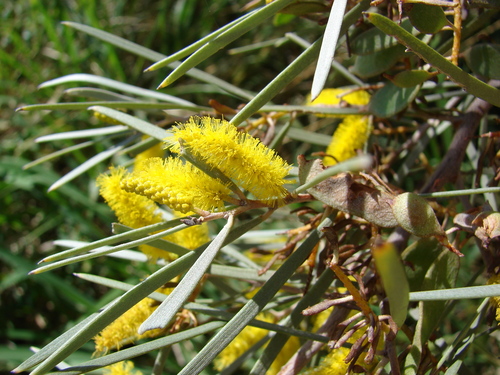
Acacia aneura
Mulga · also Mulga spearwood, Umoona
Report an issue with this species
Acacia aneura, commonly known as mulga, is a variable shrub or small tree native to inland Australia. It features flat, narrow leaves, bright yellow flowers, and leathery pods. Thriving in dry, arid climates, this low-maintenance tree tolerates poor soil conditions and provides shade, making it suitable for urban landscapes.
Where it grows
Trees in each city's inventory, with the share of that city's named trees this species accounts for.
- 4831.8%—3.0 in
No city in this list records planting dates for this species, so age is blank throughout.
Traits
- Foliage
- Evergreen
- Mature height
- 15–20 ft
- Canopy spread
- 15–20 ft
- Growth rate
- Moderate
- Water needs
- Low
- Drought tolerance
- High
- Wildlife value
- High
- Blooms
- Sep, Oct, Nov
Trunk diameters across every city: median 3.0 in, mean 3.3 in, 90th percentile 5.0 in. Measured at breast height, as published by each inventory.
Native range
Terrestrial ecoregions where this species is native. Trees in the dataset mostly stand well outside it.
Temperate Grasslands, Savannas & Shrublands
- Eastern Australia mulga shrublands
Deserts & Xeric Shrublands
- Western Australian Mulga shrublands
Other Acacia in the catalogue
35 of the top 2,000 species are in this genus.


