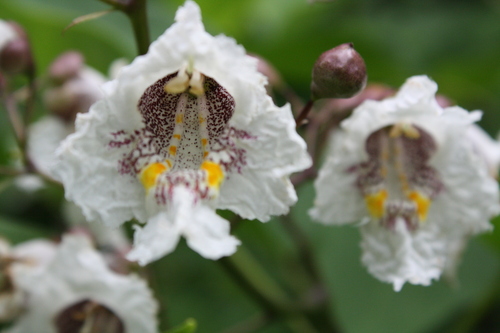
Catalpa bignonioides
Southern catalpa · also Cigartree, Indian bean tree, Catalpa tree
Report an issue with this species
This tree is known for its large, heart-shaped leaves and showy clusters of white, trumpet-shaped flowers. It provides ample shade with its broad canopy, making it a popular choice for parks and streets. Its fast growth rate and tolerance to various soil types make it a versatile option for urban landscapes.
Where it grows
Trees in each city's inventory, with the share of that city's named trees this species accounts for.
- 1,6390.14%—3.5 in
- 6820.24%32 yr5.9 in
- 5570.24%—13 in
- 4230.23%—27 in
- 3950.20%3.0 yr12 in
- 2830.07%26 yr9.9 in
- 2250.07%—8.3 in
- 1550.06%—9.1 in
- 1400.02%—7.9 in
- 730.02%—10 in
- 410.05%—14 in
- 330.21%25 yr13 in
- 320.01%—9.0 in
- 290.01%35 yr15 in
- 150.03%6.8 yr4.4 in
- 120.00%—24 in
- 100.00%—3.5 in
- 80.02%—18 in
- 70.01%23 yr60 in
- 60.01%—7.0 in
- 50.01%—13 in
- 20.00%—5.6 in
- 10.00%—14 in
Traits
- Form
- Broadleaf
- Foliage
- Deciduous
- Mature height
- 30–40 ft
- Canopy spread
- 30–40 ft
- Growth rate
- Fast
- Blooms
- Jun, Jul, Aug
Trunk diameters across every city: median 7.9 in, mean 11 in, 90th percentile 26 in. Measured at breast height, as published by each inventory.
Native range
Terrestrial ecoregions where this species is native. Trees in the dataset mostly stand well outside it.
Temperate Broadleaf & Mixed Forests
- East Central Texas forests
- Mississippi lowland forests
Temperate Grasslands, Savannas & Shrublands
- Texas blackland prairies
Other Catalpa in the catalogue
7 of the top 2,000 species are in this genus.


