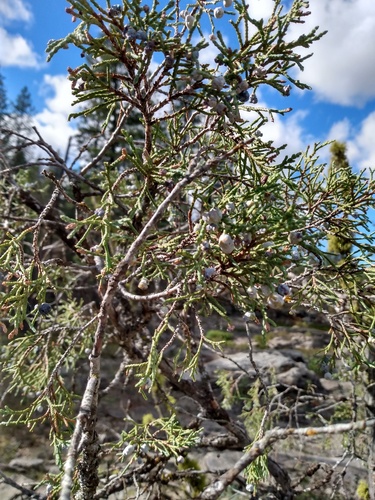
Juniperus scopulorum
Rocky Mountain juniper · also Rocky Mountain red cedar, Red-cedar, River juniper
Report an issue with this species
The Rocky Mountain juniper is a hardy, columnar evergreen tree with dense blue-green foliage and reddish-brown peeling bark. It provides valuable habitat and food for urban wildlife, with its berry-like cones attracting birds. This species thrives in urban environments due to its drought tolerance and low maintenance needs, making it suitable for landscaping and privacy screens.
Where it grows
Trees in each city's inventory, with the share of that city's named trees this species accounts for.
- 4,3541.4%—3.0 in
- 2450.05%—3.9 in
- 1290.03%8.4 yr3.9 in
- 290.07%27 yr3.9 in
- 150.01%—5.2 in
- 140.00%——
- 120.00%35 yr1.5 in
- 110.00%—5.9 in
- 40.00%—5.7 in
- 10.00%——
- 10.00%—13 in
- 10.00%—7.9 in
- 10.00%—2.0 in
- 10.00%—14 in
Traits
- Form
- Columnar
- Foliage
- Evergreen
- Mature height
- 20 ft
- Canopy spread
- 10 ft
- Water needs
- Low
- Drought tolerance
- High
- Pollution tolerance
- High
- Wildlife value
- High
- Fire risk
- Moderate
- Blooms
- Mar, Apr, May
Trunk diameters across every city: median 3.0 in, mean 7.1 in, 90th percentile 15 in. Measured at breast height, as published by each inventory.
Native range
Terrestrial ecoregions where this species is native. Trees in the dataset mostly stand well outside it.
Temperate Conifer Forests
- Alberta-British Columbia foothills forests
- Arizona Mountains forests
- Central British Columbia Mountain forests
- Colorado Rockies forests
- Northern Rockies conifer forests
- South Central Rockies forests
Temperate Grasslands, Savannas & Shrublands
- Montana Valley and Foothill grasslands
- Nebraska Sand Hills mixed grasslands
- Northern Shortgrass prairie
Other Juniperus in the catalogue
12 of the top 2,000 species are in this genus.


