Juniperus
Juniper · also Junipers, Cedar, Redcedar
Report an issue with this species
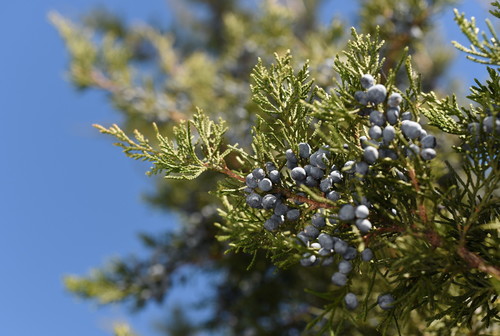
Junipers are coniferous trees and shrubs in the cypress family (Cupressaceae), widely distributed across the Northern Hemisphere. They are generally drought tolerant, with some species featuring feathery foliage and producing berry-like cones that attract birds and butterflies. Some varieties are known to cause seasonal allergies.
Where it grows
Trees in each city's inventory, with the share of that city's named trees this species accounts for.
- 3,0460.65%35 yr7.5 in
- 2,8470.54%—3.9 in
- 1,5100.22%—3.9 in
- 6270.21%—3.0 in
- 3570.11%—3.9 in
- 3380.13%—5.9 in
- 1860.25%—6.3 in
- 1660.05%20 yr5.1 in
- 860.01%—1.5 in
- 590.07%—5.7 in
- 460.03%12 yr9.8 in
- 450.06%—2.0 in
- 370.03%1.9 yr1.8 in
- 210.09%—5.1 in
- 170.00%21 yr9.0 in
- 160.01%59 yr5.9 in
- 150.04%—7.9 in
- 150.13%—17 in
- 80.00%—11 in
- 80.02%——
- 60.01%—4.7 in
- 50.00%—5.0 in
- 10.01%——
- 10.00%——
Traits
- Form
- Conifer
- Foliage
- Evergreen
- Mature height
- 10–40 ft
- Canopy spread
- 10–40 ft
- Growth rate
- Moderate
- Water needs
- Low
- Drought tolerance
- High
- Wildlife value
- Moderate
- Blooms
- Mar, Apr, May
Trunk diameters across every city: median 3.9 in, mean 5.7 in, 90th percentile 9.0 in. Measured at breast height, as published by each inventory.
Native range
Terrestrial ecoregions where this species is native. Trees in the dataset mostly stand well outside it.
Temperate Broadleaf & Mixed Forests
- East Central Texas forests
- Central China Loess Plateau mixed forests
- Northeast China Plain deciduous forests
- Southern Korea evergreen forests
Temperate Grasslands, Savannas & Shrublands
- California Central Valley grasslands
- Central US forest-grasslands transition
- Central-Southern US mixed grasslands
Tropical & Subtropical Moist Broadleaf Forests
- Nansei Islands subtropical evergreen forests
Temperate Conifer Forests
- South Central Rockies forests
Tropical & Subtropical Coniferous Forests
- Central American pine-oak forests
Other Juniperus in the catalogue
12 of the top 2,000 species are in this genus.


