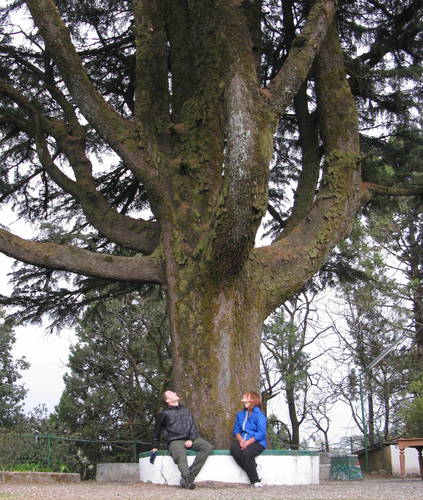
Cedrus deodara
Deodar cedar · also Himalayan cedar, Deodar
Report an issue with this species
The Deodar Cedar is a majestic evergreen conifer with graceful, sweeping branches and soft, blue-green needle-like leaves. It maintains a pyramidal shape when young, maturing into a more open form with dark, furrowed bark. Well-suited for large spaces like parks, it provides excellent shade and acts as a windbreak in urban environments.
Where it grows
Trees in each city's inventory, with the share of that city's named trees this species accounts for.
- 2,6670.57%35 yr18 in
- 8190.07%—6.4 in
- 4790.26%—24 in
- 2400.10%—19 in
- 1450.04%—13 in
- 1370.39%—20 in
- 1200.09%—7.5 in
- 1100.06%11 yr8.4 in
- 980.01%—8.0 in
- 810.03%19 yr5.9 in
- 560.36%19 yr28 in
- 330.02%—3.8 in
- 250.01%—21 in
- 170.03%7.8 yr—
- 120.01%9.1 yr14 in
- 70.00%—3.0 in
Traits
- Form
- Conifer
- Foliage
- Evergreen
- Mature height
- 40–60 ft
- Canopy spread
- 20–30 ft
- Growth rate
- Fast
- Wildlife value
- Moderate
- Blooms
- Sep, Oct, Nov
Trunk diameters across every city: median 18 in, mean 18 in, 90th percentile 30 in. Measured at breast height, as published by each inventory.
Native range
Terrestrial ecoregions where this species is native. Trees in the dataset mostly stand well outside it.
Temperate Broadleaf & Mixed Forests
- Western Himalayan broadleaf forests
Temperate Conifer Forests
- Western Himalayan subalpine conifer forests
Other Cedrus in the catalogue
4 of the top 2,000 species are in this genus.


