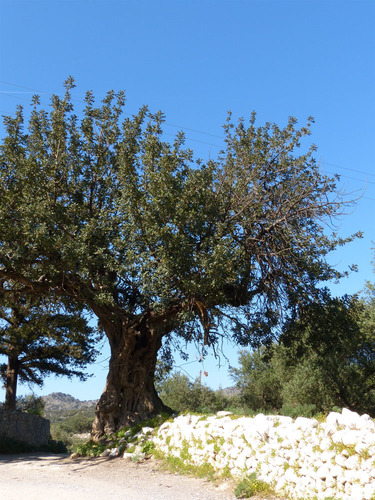
Ceratonia siliqua
Carob · also Carob tree, St. John's bread, Locust bean
Report an issue with this species
The carob is an evergreen tree or shrub native to the Mediterranean region and Middle East. It produces edible seed pods, used as a chocolate alternative and to produce locust bean gum. This drought-tolerant tree is cultivated as an ornamental and provides food for birds.
Where it grows
Trees in each city's inventory, with the share of that city's named trees this species accounts for.
- 7,5491.6%35 yr21 in
- 5350.40%—10 in
- 871.1%——
- 170.01%—3.8 in
- 80.03%—23 in
- 40.00%—9.1 in
- 20.00%—2.3 in
Traits
- Foliage
- Evergreen
- Mature height
- 30–40 ft
- Canopy spread
- 30–40 ft
- Growth rate
- Moderate
- Drought tolerance
- High
- Wildlife value
- Moderate
- Blooms
- Mar, Apr, May
Trunk diameters across every city: median 21 in, mean 21 in, 90th percentile 30 in. Measured at breast height, as published by each inventory.
Native range
Terrestrial ecoregions where this species is native. Trees in the dataset mostly stand well outside it.
Mediterranean Forests, Woodlands & Scrub
- Aegean and Western Turkey sclerophyllous and mixed forests
- Cyprus Mediterranean forests
- Northeast Spain and Southern France Mediterranean forests
Other Ceratonia in the catalogue
2 of the top 2,000 species are in this genus.
