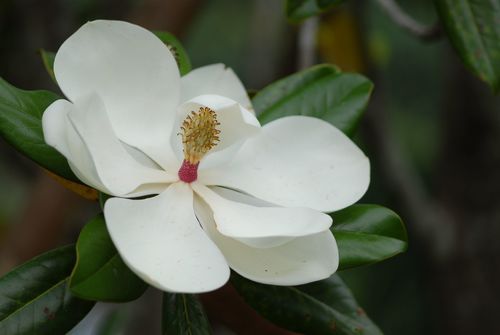
Magnolia
Magnolia · also Magnolias, Magnolia blanca, Magnolio
Report an issue with this species
Magnolia is a diverse genus of trees and shrubs, celebrated for their large, fragrant, bowl- or star-shaped flowers that appear early in the season. These plants produce unique cone-like fruits in autumn and can be evergreen or deciduous. They are highly valued in horticulture for their showy blooms and have traditional medicinal uses.
Where it grows
Trees in each city's inventory, with the share of that city's named trees this species accounts for.
- 4,2370.37%—1.1 in
- 6910.10%—5.0 in
- 5090.26%13 yr4.2 in
- 3260.18%—6.0 in
- 3060.14%—4.5 in
- 2550.22%—8.6 in
- 2400.08%12 yr5.9 in
- 2140.07%—2.6 in
- 2031.3%25 yr7.1 in
- 1520.10%11 yr12 in
- 1460.19%—4.7 in
- 1370.01%——
- 1200.04%7.9 yr3.1 in
- 1090.15%—4.7 in
- 940.04%—3.8 in
- 840.24%—2.4 in
- 420.01%—3.0 in
- 420.09%—3.0 in
- 390.01%6.8 yr3.3 in
- 390.17%—3.5 in
- 350.03%8.1 yr3.0 in
- 220.04%——
- 190.00%——
- 180.02%—4.4 in
- 130.02%3.8 yr2.0 in
- 30.00%—5.5 in
- 30.01%—2.0 in
- 10.01%—5.0 in
Traits
- Mature height
- 15–80 ft
- Canopy spread
- 15–30 ft
- Growth rate
- Fast
- Soil
- Well-drained
- Water needs
- Moderate
- Wildlife value
- Moderate
- Blooms
- Mar, Apr, May, Jun, Jul, Aug
Trunk diameters across every city: median 2.4 in, mean 4.0 in, 90th percentile 8.7 in. Measured at breast height, as published by each inventory.
Native range
Terrestrial ecoregions where this species is native. Trees in the dataset mostly stand well outside it.
Temperate Broadleaf & Mixed Forests
- East Central Texas forests
- Central China Loess Plateau mixed forests
- Central Korean deciduous forests
- Northeast China Plain deciduous forests
Tropical & Subtropical Moist Broadleaf Forests
- South China-Vietnam subtropical evergreen forests
- Central American Atlantic moist forests
- Central American montane forests
Other Magnolia in the catalogue
32 of the top 2,000 species are in this genus.


