#298 most planted
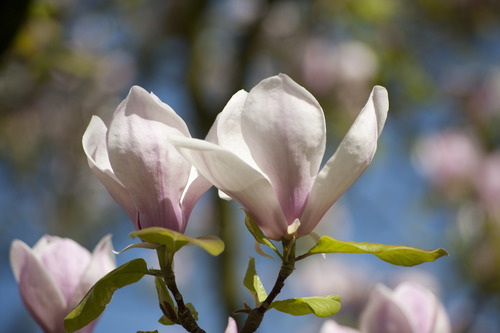
Magnolia x soulangeana
Saucer magnolia · also Chinese magnolia, Japanese magnolia, Tulip tree
Multi-trunkDeciduous
4,212
trees mapped
0.04%
of all named trees
22
cities
4.7 in
median trunk (12 cm, 3,974 measured)
Report an issue with this species
Magnolia x soulangeana is a popular deciduous hybrid known for its large, early-blooming flowers in shades of white, pink, and purple. It is often grown as a multi-trunked accent tree in gardens and lawns. It thrives in full sun and requires loose, fertile soil with moderate moisture.
Where it grows
Trees in each city's inventory, with the share of that city's named trees this species accounts for.
- 2,6900.39%—4.7 in
- 2790.14%7.6 yr2.5 in
- 2660.06%35 yr1.5 in
- 2490.11%—5.0 in
- 1480.06%—4.3 in
- 1350.05%21 yr5.9 in
- 800.04%—11 in
- 790.06%2.4 yr5.0 in
- 520.02%—3.0 in
- 470.04%—11 in
- 400.11%—5.5 in
- 290.18%25 yr7.1 in
- 270.06%13 yr—
- 250.01%5.0 yr2.0 in
- 220.00%—4.0 in
- 190.00%39 yr8.6 in
- 100.01%—1.6 in
- 60.01%—4.7 in
- 50.00%—5.1 in
- 20.02%—3.9 in
- 10.00%——
- 10.00%—5.9 in
Traits
- Form
- Multi-trunk
- Foliage
- Deciduous
- Mature height
- 25 ft
- Canopy spread
- 25 ft
- Sun
- Full sun
- Soil
- Well-drained, Fertile
- Water needs
- Moderate
- Blooms
- Feb, Mar, Apr
Trunk diameters across every city: median 4.7 in, mean 5.9 in, 90th percentile 12 in. Measured at breast height, as published by each inventory.
Other Magnolia in the catalogue
32 of the top 2,000 species are in this genus.


