Cupaniopsis anacardioides
Tuckeroo · also Cashew-leaf cupania, Carrotwood, Beach tamarind
Report an issue with this species
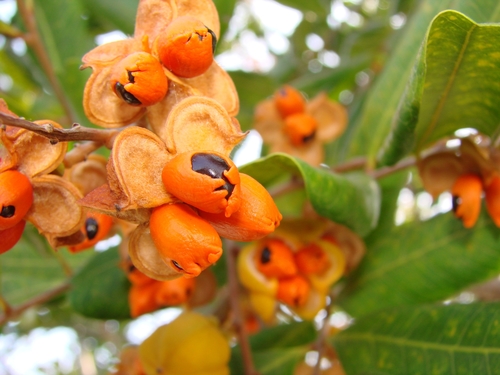
This tree features a dense, rounded canopy and glossy, dark green leaves. It produces small, inconspicuous flowers during winter, followed by bright orange, pumpkin-shaped fruits in summer. It is well-suited for urban planting, tolerates coastal conditions and salt, and is drought-tolerant once established, requiring minimal maintenance.
Where it grows
Trees in each city's inventory, with the share of that city's named trees this species accounts for.
- 7,2521.6%29 yr7.5 in
- 1770.13%—6.0 in
- 30.00%—4.7 in
Traits
- Form
- Broadleaf
- Foliage
- Evergreen
- Mature height
- 40 ft
- Canopy spread
- 30 ft
- Growth rate
- Moderate
- Water needs
- Low
- Drought tolerance
- Low
- Tolerates
- coastal, salt
- Blooms
- Jun, Jul, Aug
Trunk diameters across every city: median 7.5 in, mean 8.4 in, 90th percentile 15 in. Measured at breast height, as published by each inventory.
Native range
Terrestrial ecoregions where this species is native. Trees in the dataset mostly stand well outside it.
Tropical & Subtropical Moist Broadleaf Forests
- Queensland tropical rain forests
Other Cupaniopsis in the catalogue
2 of the top 2,000 species are in this genus.
