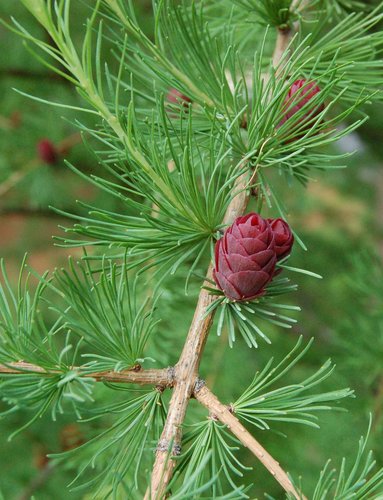
Larix laricina
Tamarack · also Hackmatack, Eastern larch, Black larch
Report an issue with this species
Larix laricina, commonly known as tamarack, is a deciduous conifer native to a wide range across Canada and the northeastern United States. It is notable among conifers for its needle-like foliage that turns golden yellow in the fall before dropping. This species is adapted to cold climates and is generally intolerant of shade, preferring full sun conditions.
Where it grows
Trees in each city's inventory, with the share of that city's named trees this species accounts for.
- 1,4070.89%9.3 yr3.1 in
- 1,1890.37%—5.1 in
- 1,1700.35%4.9 yr2.0 in
- 7440.15%6.4 yr2.4 in
- 6080.09%—5.1 in
- 4831.0%—0.4 in
- 2650.10%—6.7 in
- 2450.08%—4.7 in
- 1370.03%—2.8 in
- 480.07%—7.0 in
- 470.06%—8.4 in
- 380.05%4.8 yr2.4 in
- 320.07%—2.2 in
- 240.02%5.5 yr7.2 in
- 190.00%—7.0 in
- 70.00%—11 in
- 10.00%—7.1 in
Traits
- Form
- Conifer
- Foliage
- Deciduous
- Sun
- Full sun
- Water needs
- Moderate
- Wildlife value
- Moderate
Trunk diameters across every city: median 2.8 in, mean 4.9 in, 90th percentile 11 in. Measured at breast height, as published by each inventory.
Native range
Terrestrial ecoregions where this species is native. Trees in the dataset mostly stand well outside it.
Temperate Broadleaf & Mixed Forests
- New England-Acadian forests
- Western Great Lakes forests
Temperate Conifer Forests
- Alberta-British Columbia foothills forests
- Central British Columbia Mountain forests
Boreal Forests/Taiga
- Northwest Territories taiga
Other Larix in the catalogue
9 of the top 2,000 species are in this genus.


