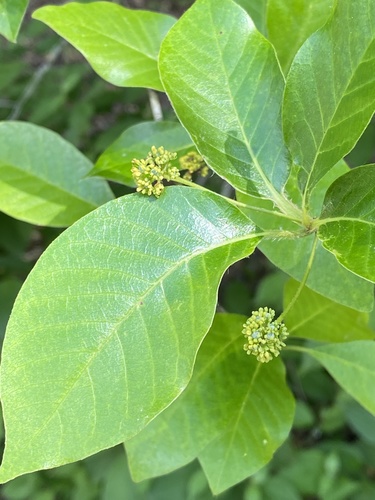
Nyssa sylvatica
Tupelo · also Black tupelo, Black gum, Sour gum
Report an issue with this species
Nyssa sylvatica, also known as tupelo or black gum, is a deciduous tree notable for its vibrant red, orange, and yellow autumn foliage. It exhibits a pyramidal shape in youth, maturing to a more irregular, rounded form with dark, furrowed bark. This versatile urban landscape tree thrives in varied moisture conditions, attracting birds with its berries, and has deep roots beneficial for erosion control.
Where it grows
Trees in each city's inventory, with the share of that city's named trees this species accounts for.
- 3,3411.7%8.9 yr3.3 in
- 1,7140.94%—3.0 in
- 5660.48%3.6 yr2.0 in
- 4510.06%—3.0 in
- 3740.50%3.8 yr2.0 in
- 3460.05%—2.4 in
- 2620.10%—2.0 in
- 2170.08%4.8 yr9.8 in
- 1861.2%6.6 yr4.3 in
- 1480.01%—0.6 in
- 1470.04%2.0 yr2.0 in
- 1010.29%—2.0 in
- 810.11%5.8 yr1.6 in
- 450.01%—3.0 in
- 270.02%—3.0 in
- 210.04%7.8 yr—
- 200.01%—2.5 in
- 100.08%3.8 yr2.0 in
- 50.00%6.8 yr2.0 in
- 40.02%—5.1 in
- 20.00%—2.0 in
- 10.01%—3.9 in
Traits
- Form
- Broadleaf
- Foliage
- Deciduous
- Mature height
- 30–50 ft
- Canopy spread
- 20–30 ft
- Growth rate
- Moderate
- Water needs
- High
- Drought tolerance
- High
- Roots
- Non-invasive
- Wildlife value
- High
- Blooms
- Mar, Apr, May
Trunk diameters across every city: median 3.0 in, mean 3.7 in, 90th percentile 6.7 in. Measured at breast height, as published by each inventory.
Native range
Terrestrial ecoregions where this species is native. Trees in the dataset mostly stand well outside it.
Temperate Broadleaf & Mixed Forests
- East Central Texas forests
- Mississippi lowland forests
- New England-Acadian forests
- Northeast US Coastal forests
Other Nyssa in the catalogue
3 of the top 2,000 species are in this genus.

