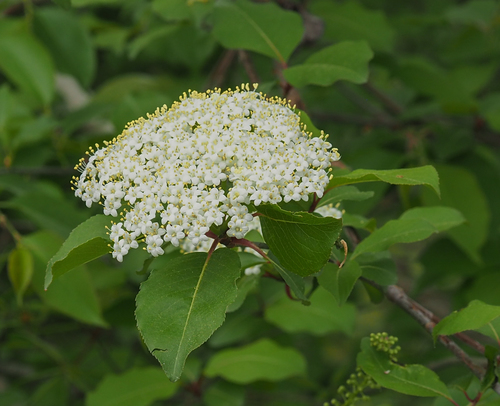
Viburnum prunifolium
Blackhaw · also Black haw, Blackhaw viburnum, Sweet haw
Report an issue with this species
Viburnum prunifolium is a small tree or multi-stemmed shrub native to central and eastern North America. It features dark, checkered bark, creamy white spring flowers, and edible dark blue-black fruit in the fall. Valued for its tolerance of urban environments, it is a highly trainable ornamental suitable for smaller spaces.
Where it grows
Trees in each city's inventory, with the share of that city's named trees this species accounts for.
- 110.01%7.5 yr—
- 70.00%—2.5 in
- 40.00%—9.0 in
Traits
- Form
- Multi-trunk
- Foliage
- Deciduous
- Mature height
- 12–15 ft
- Canopy spread
- 8–15 ft
- Growth rate
- Moderate
- Water needs
- Moderate
- Pollution tolerance
- Moderate
- Wildlife value
- High
- Blooms
- Mar, Apr, May
Trunk diameters across every city: median 3.0 in, mean 6.1 in, 90th percentile 9.0 in. Measured at breast height, as published by each inventory.
Native range
Terrestrial ecoregions where this species is native. Trees in the dataset mostly stand well outside it.
Temperate Broadleaf & Mixed Forests
- East Central Texas forests
- Mississippi lowland forests
- New England-Acadian forests
Temperate Grasslands, Savannas & Shrublands
- Central US forest-grasslands transition
Other Viburnum in the catalogue
19 of the top 2,000 species are in this genus.


