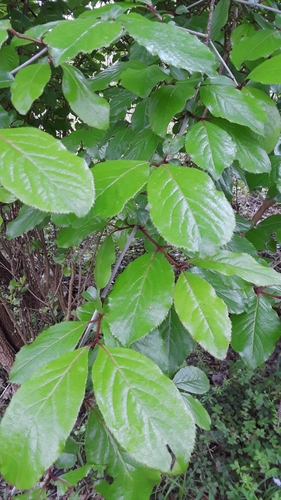
Viburnum rufidulum
Rusty blackhaw · also Blue haw, Rusty nanny-berry, Southern black haw
Report an issue with this species
Viburnum rufidulum, also known as rusty blackhaw, is a deciduous shrub or small tree native to the southeastern and central United States. It features glossy green leaves that turn vibrant red in autumn, attractive flowers, and edible blue-black fruits. This species is notably tolerant of heat and drought once established and performs best in well-drained soils.
Where it grows
Trees in each city's inventory, with the share of that city's named trees this species accounts for.
- 170.01%1.5 yr11 in
Traits
- Foliage
- Deciduous
- Mature height
- 20–25 ft
- Canopy spread
- 20–25 ft
- Growth rate
- Moderate
- Soil
- Well-drained
- Water needs
- Moderate
- Drought tolerance
- High
- Wildlife value
- High
- Blooms
- Mar, Apr, May
Trunk diameters across every city: median 11 in, mean 11 in, 90th percentile 11 in. Measured at breast height, as published by each inventory.
Native range
Terrestrial ecoregions where this species is native. Trees in the dataset mostly stand well outside it.
Temperate Broadleaf & Mixed Forests
- East Central Texas forests
- Mississippi lowland forests
Temperate Grasslands, Savannas & Shrublands
- Texas blackland prairies
Other Viburnum in the catalogue
19 of the top 2,000 species are in this genus.


