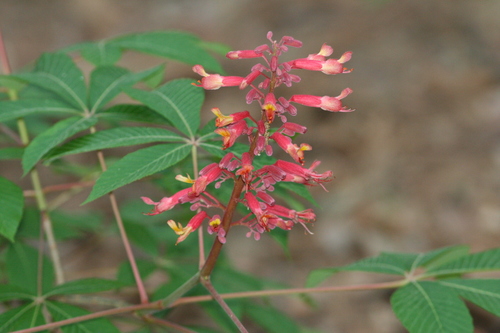
Aesculus pavia
Red buckeye · also Firecracker plant, Scarlet buckeye, Woolly buckeye
Report an issue with this species
Aesculus pavia, also known as red buckeye, is a deciduous shrub or small tree with vibrant red flowers and palmately compound leaves. It thrives in wooded areas, attracts hummingbirds, and can be grown as a multi-trunked or standard tree. Leaves drop by late summer, and the plant is susceptible to powdery mildew and is mildly toxic.
Where it grows
Trees in each city's inventory, with the share of that city's named trees this species accounts for.
- 1220.06%12 yr3.2 in
- 520.02%—18 in
- 450.00%—2.3 in
- 360.01%12 yr9.8 in
- 230.02%7.5 yr11 in
- 200.13%21 yr9.4 in
- 160.01%—15 in
- 30.00%—14 in
- 30.00%—27 in
- 20.00%—3.0 in
Traits
- Form
- Multi-trunk
- Foliage
- Deciduous
- Mature height
- 15–25 ft
- Canopy spread
- 15–25 ft
- Wildlife value
- High
- Blooms
- Mar, Apr, May
Trunk diameters across every city: median 4.9 in, mean 8.0 in, 90th percentile 19 in. Measured at breast height, as published by each inventory.
Native range
Terrestrial ecoregions where this species is native. Trees in the dataset mostly stand well outside it.
Temperate Grasslands, Savannas & Shrublands
- Central US forest-grasslands transition
- Central-Southern US mixed grasslands
- Texas blackland prairies
Temperate Broadleaf & Mixed Forests
- East Central Texas forests
- Mississippi lowland forests
Other Aesculus in the catalogue
15 of the top 2,000 species are in this genus.


