Alnus incana
Grey alder · also Tag alder, Speckled alder, Gray alder
Report an issue with this species
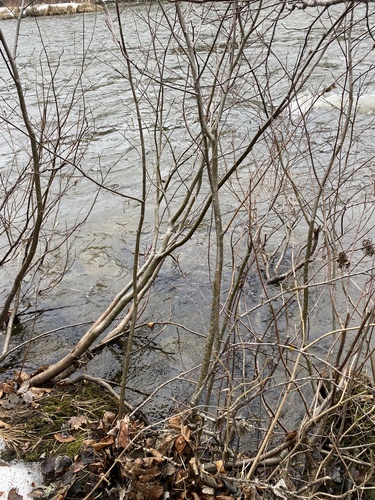
Alnus incana, a multi-stemmed, shrubby tree, is often found in swamps and wetlands, tolerant of wetter soils, and capable of spreading with runners. It has rounded, coarsely-toothed leaves with pale undersides and produces purple-red catkins and small woody cones. This species fixes nitrogen, thrives in poor or disturbed soils, and offers cover and food for diverse wildlife.
Where it grows
Trees in each city's inventory, with the share of that city's named trees this species accounts for.
- 2,1770.19%—1.9 in
- 7220.25%27 yr9.8 in
- 2480.34%6.8 yr5.9 in
- 540.02%—7.5 in
- 360.02%—4.8 in
- 320.01%8.0 yr6.1 in
- 310.04%5.8 yr2.4 in
- 280.01%38 yr12 in
- 240.01%—3.0 in
- 180.04%—3.9 in
- 140.03%—0.8 in
- 120.08%29 yr7.3 in
- 50.00%18 yr17 in
- 30.00%—5.0 in
- 10.00%—4.7 in
- 10.00%—11 in
Traits
- Form
- Multi-trunk
- Foliage
- Deciduous
- Mature height
- 20–70 ft
- Canopy spread
- 15–20 ft
- Growth rate
- Fast
- Wildlife value
- High
- Blooms
- Mar, Apr, May
Trunk diameters across every city: median 2.8 in, mean 4.1 in, 90th percentile 9.8 in. Measured at breast height, as published by each inventory.
Native range
Terrestrial ecoregions where this species is native. Trees in the dataset mostly stand well outside it.
Temperate Conifer Forests
- Alberta-British Columbia foothills forests
- Arizona Mountains forests
- British Columbia coastal conifer forests
- Central British Columbia Mountain forests
- Colorado Rockies forests
- Northern California coastal forests
Temperate Broadleaf & Mixed Forests
- Baltic mixed forests
- Central European mixed forests
- East European forest steppe
- Eastern Anatolian deciduous forests
- Western European broadleaf forests
- Western Siberian hemiboreal forests
Other Alnus in the catalogue
18 of the top 2,000 species are in this genus.


