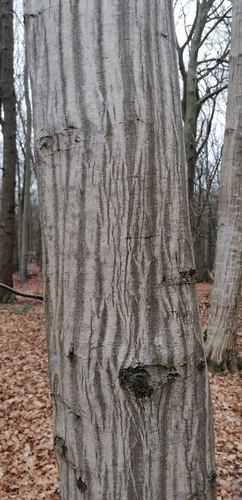
Carpinus betulus
European hornbeam · also Common hornbeam, Hornbeam, Yoke elm
Report an issue with this species
Carpinus betulus is a modest yet ornamental shade tree with a broad, cone-shaped canopy and textured dark green foliage. It is highly resistant to insect herbivory and disease. It produces small, papery fruits that attract birds and small mammals and is tolerant to drought and urban pollution.
Where it grows
Trees in each city's inventory, with the share of that city's named trees this species accounts for.
- 33,9643.0%—2.6 in
- 8,0291.8%27 yr7.3 in
- 6,8932.4%37 yr9.8 in
- 5,9063.2%—8.5 in
- 3,8651.7%—6.9 in
- 3,3280.46%—5.0 in
- 8251.7%16 yr4.5 in
- 7782.2%—13 in
- 4690.24%11 yr4.4 in
- 4010.06%—3.1 in
- 3720.32%24 yr3.0 in
- 2951.2%—7.5 in
- 1790.07%—3.9 in
- 1770.06%—3.0 in
- 1671.1%5.9 yr3.7 in
- 1550.21%3.8 yr2.4 in
- 1290.10%0.6 yr3.0 in
- 1260.17%9.8 yr2.0 in
- 850.11%3.8 yr1.6 in
- 560.02%4.4 yr2.0 in
- 540.12%—3.1 in
- 40.00%—25 in
Traits
- Foliage
- Deciduous
- Mature height
- 35–40 ft
- Canopy spread
- 20–30 ft
- Growth rate
- Moderate
- Drought tolerance
- High
- Wildlife value
- Moderate
- Blooms
- Mar, Apr, May
Trunk diameters across every city: median 4.5 in, mean 6.1 in, 90th percentile 13 in. Measured at breast height, as published by each inventory.
Native range
Terrestrial ecoregions where this species is native. Trees in the dataset mostly stand well outside it.
Temperate Broadleaf & Mixed Forests
- Balkan mixed forests
- Baltic mixed forests
- Caucasus mixed forests
- Central European mixed forests
- East European forest steppe
- European Atlantic mixed forests
- Western European broadleaf forests
Montane Grasslands & Shrublands
- Kuh Rud and Eastern Iran montane woodlands
Other Carpinus in the catalogue
9 of the top 2,000 species are in this genus.


