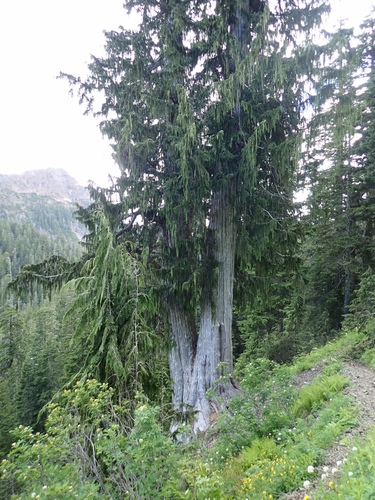
Cupressus nootkatensis
Nootka cypress · also Yellow cypress, Alaska cypress, Nootka cedar
Report an issue with this species
This tree is known for its elegant, weeping branches that create a graceful, cascading effect. Its dark green foliage is dense and finely textured, providing excellent year-round coverage. The tree's narrow, pyramidal shape makes it a striking focal point in urban landscapes.
Where it grows
Trees in each city's inventory, with the share of that city's named trees this species accounts for.
- 2760.15%—10 in
- 550.16%—18 in
- 390.01%31 yr5.9 in
- 350.01%3.4 yr2.0 in
- 330.00%—3.3 in
- 300.01%—5.9 in
- 280.18%19 yr10 in
- 270.00%—3.9 in
- 240.05%—5.3 in
- 240.03%—4.3 in
- 220.03%—4.7 in
- 130.01%7.2 yr18 in
- 110.05%—3.9 in
- 90.00%—2.0 in
- 40.01%—2.0 in
- 20.00%—4.5 in
- 20.02%——
Traits
- Form
- Conifer
- Foliage
- Evergreen
- Mature height
- 50–80 ft
- Canopy spread
- 25 ft
- Water needs
- Moderate
- Wildlife value
- Moderate
- Tolerates
- coastal
- Blooms
- Mar, Apr, May
Trunk diameters across every city: median 6.5 in, mean 11 in, 90th percentile 22 in. Measured at breast height, as published by each inventory.
Native range
Terrestrial ecoregions where this species is native. Trees in the dataset mostly stand well outside it.
Temperate Conifer Forests
- British Columbia coastal conifer forests
- Central Pacific Northwest coastal forests
- Northern California coastal forests
- Northern Pacific Alaskan coastal forests
Other Cupressus in the catalogue
12 of the top 2,000 species are in this genus.


