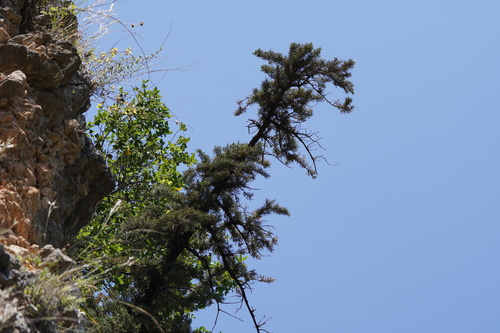
Cupressus sempervirens
Mediterranean cypress · also Italian cypress, Tuscan cypress, Persian cypress
Report an issue with this species
This classic evergreen tree, often recognized for its narrow, columnar form in cultivation, is native to the eastern Mediterranean and Iran. It is well-adapted to various soil conditions, including acidic and alkaline, and exhibits high drought tolerance. Wild forms may have a wider, more spreading canopy.
Where it grows
Trees in each city's inventory, with the share of that city's named trees this species accounts for.
- 13,2972.8%35 yr7.5 in
- 2,0550.14%——
- 4710.14%—8.7 in
- 3850.17%—5.2 in
- 1540.10%—1.9 in
- 1430.11%—4.0 in
- 630.01%—1.1 in
- 330.01%21 yr7.9 in
- 180.07%—10 in
- 10.01%——
- 10.00%—3.0 in
Traits
- Form
- Columnar
- Foliage
- Evergreen
- Mature height
- 50–70 ft
- Canopy spread
- 10–20 ft
- Growth rate
- Fast
- Soil
- Acidic, Alkaline
- Water needs
- Moderate
- Drought tolerance
- High
Trunk diameters across every city: median 7.5 in, mean 6.5 in, 90th percentile 9.0 in. Measured at breast height, as published by each inventory.
Native range
Terrestrial ecoregions where this species is native. Trees in the dataset mostly stand well outside it.
Mediterranean Forests, Woodlands & Scrub
- Aegean and Western Turkey sclerophyllous and mixed forests
- Cyprus Mediterranean forests
Temperate Conifer Forests
- Elburz Range forest steppe
Deserts & Xeric Shrublands
- South Iran Nubo-Sindian desert and semi-desert
Other Cupressus in the catalogue
12 of the top 2,000 species are in this genus.


