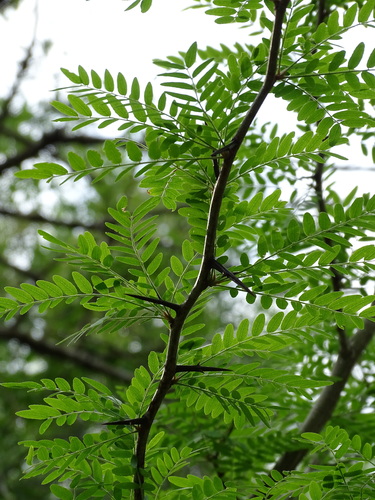
Gleditsia
Honey locust · also Gleditsia, Chinese honey locust, Common honeylocust
Report an issue with this species
Gleditsia, commonly known as Honey Locust, is a genus of deciduous trees known for their open, spreading canopy and delicate, feathery leaves. They produce inconspicuous flowers in spring and summer, followed by twisted seed pods. These trees are highly adaptable to various soil types and urban conditions, tolerating moderate drought and pollution, though they are sensitive to ocean salt spray.
Where it grows
Trees in each city's inventory, with the share of that city's named trees this species accounts for.
- 1,0100.51%10 yr7.3 in
- 4580.55%—7.9 in
- 4510.29%—11 in
- 3330.10%30 yr7.5 in
- 2920.19%9.8 yr12 in
- 1050.01%—3.3 in
- 450.09%34 yr—
- 300.01%—3.8 in
- 210.01%11 yr5.9 in
- 180.01%——
- 30.01%——
- 20.01%——
- 20.02%——
- 10.00%——
- 10.00%——
Traits
- Form
- Spreading
- Foliage
- Deciduous
- Mature height
- 35–70 ft
- Canopy spread
- 25–35 ft
- Growth rate
- Fast
- Water needs
- Moderate
- Drought tolerance
- Moderate
- Pollution tolerance
- High
- Wildlife value
- Moderate
- Blooms
- Mar, Apr, May, Jun, Jul, Aug
Trunk diameters across every city: median 8.3 in, mean 9.4 in, 90th percentile 18 in. Measured at breast height, as published by each inventory.
Other Gleditsia in the catalogue
4 of the top 2,000 species are in this genus.

