#385 most planted
Quercus velutina
Black oak · also Eastern black oak, Yellow oak, Quercitron oak
2,762
trees mapped
0.03%
of all named trees
15
cities
20 in
median trunk (51 cm, 2,715 measured)
Report an issue with this species
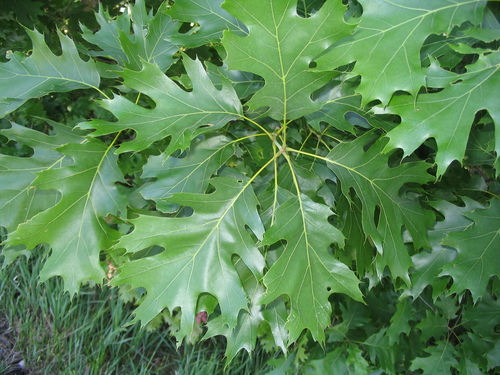
Quercus velutina, also known as black oak, is named for the yellow pigment found in its inner bark. It is a widespread oak species native to eastern and central North America.
Where it grows
Trees in each city's inventory, with the share of that city's named trees this species accounts for.
- 1,2480.17%—10 in
- 9430.14%—30 in
- 2500.21%11 yr39 in
- 1450.19%3.8 yr2.4 in
- 610.03%—28 in
- 570.08%—4.7 in
- 240.01%—18 in
- 100.00%—21 in
- 80.00%14 yr—
- 70.01%—1.2 in
- 20.00%—13 in
- 20.00%—2.0 in
- 20.00%——
- 20.02%—3.0 in
- 10.00%—12 in
Native range
Terrestrial ecoregions where this species is native. Trees in the dataset mostly stand well outside it.
Temperate Broadleaf & Mixed Forests
- East Central Texas forests
- Eastern Canadian Forest-Boreal transition
- Eastern Great Lakes lowland forests
- Mississippi lowland forests
Other Quercus in the catalogue
74 of the top 2,000 species are in this genus.


