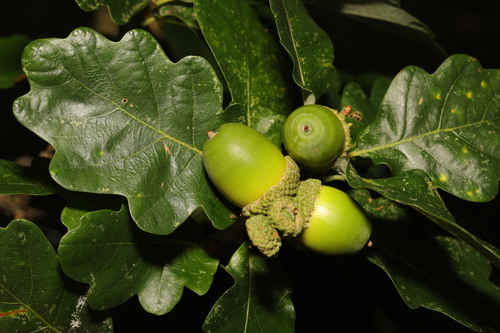
Quercus petraea
Sessile oak · also Welsh oak, Cornish oak, Irish oak
Report an issue with this species
Quercus petraea is a deciduous oak native to most of Europe and into Anatolia and Iran, known for its sessile acorns and stalked leaves. It is the national tree of Ireland and an emblem in Wales, often used as a timber tree. Its preference for rocky soils is reflected in its species name.
Where it grows
Trees in each city's inventory, with the share of that city's named trees this species accounts for.
- 7,85716.0%13 yr6.3 in
- 1,6000.37%38 yr13 in
- 4890.21%—5.6 in
- 3410.03%—4.5 in
- 920.03%3.8 yr9.8 in
- 70.01%—12 in
- 30.00%—2.0 in
- 30.00%—9.1 in
- 10.00%—13 in
- 10.00%—1.9 in
Traits
- Foliage
- Deciduous
- Mature height
- 30–80 ft
- Canopy spread
- 30–75 ft
- Soil
- Rocky
- Water needs
- Moderate
- Wildlife value
- High
- Blooms
- Mar, Apr, May
Trunk diameters across every city: median 10 in, mean 12 in, 90th percentile 24 in. Measured at breast height, as published by each inventory.
Native range
Terrestrial ecoregions where this species is native. Trees in the dataset mostly stand well outside it.
Temperate Broadleaf & Mixed Forests
- Baltic mixed forests
- Central Anatolian steppe and woodlands
- Central European mixed forests
- East European forest steppe
- Eastern Anatolian deciduous forests
- European Atlantic mixed forests
- Western European broadleaf forests
Montane Grasslands & Shrublands
- Kuh Rud and Eastern Iran montane woodlands
Other Quercus in the catalogue
74 of the top 2,000 species are in this genus.


