#246 most planted
Quercus coccinea
Scarlet oak
BroadleafDeciduous
6,643
trees mapped
0.06%
of all named trees
27
cities
9.0 in
median trunk (23 cm, 6,410 measured)
Report an issue with this species
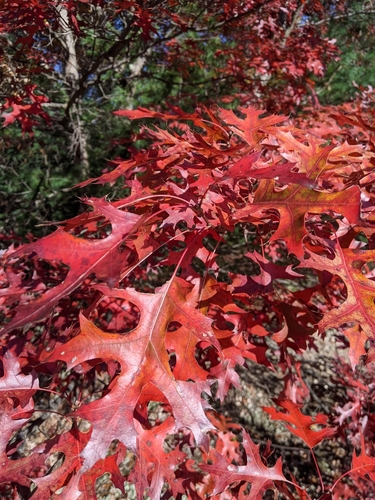
The Scarlet Oak is a deciduous tree native to the central and eastern United States, typically found on dry, sandy, acidic soils. It is known for its outstanding fall color and is an important canopy species in oak-heath forests.
Where it grows
Trees in each city's inventory, with the share of that city's named trees this species accounts for.
- 2,5241.3%14 yr15 in
- 1,6340.22%—10 in
- 5980.33%—4.4 in
- 3240.03%—4.1 in
- 1870.06%4.9 yr2.0 in
- 1860.16%—5.0 in
- 1800.06%—3.0 in
- 1560.04%6.8 yr3.7 in
- 1340.02%—2.4 in
- 1260.17%5.8 yr2.0 in
- 1040.07%6.1 yr2.0 in
- 1020.04%9.3 yr5.9 in
- 860.03%—2.0 in
- 690.03%—3.8 in
- 520.12%—2.0 in
- 430.27%5.7 yr3.1 in
- 430.06%—4.7 in
- 350.30%0.2 yr1.9 in
- 340.10%—8.5 in
- 100.02%6.8 yr—
- 30.00%—3.0 in
- 30.00%—14 in
- 30.03%—2.0 in
- 30.00%——
- 20.00%—26 in
- 10.00%——
- 10.00%—2.0 in
Traits
- Form
- Broadleaf
- Foliage
- Deciduous
- Mature height
- 50–70 ft
- Canopy spread
- 50 ft
- Growth rate
- Fast
- Soil
- Sandy, Acidic, Well-drained
- Water needs
- Moderate
- Wildlife value
- Moderate
- Blooms
- Mar, Apr, May
Trunk diameters across every city: median 9.0 in, mean 12 in, 90th percentile 28 in. Measured at breast height, as published by each inventory.
Native range
Terrestrial ecoregions where this species is native. Trees in the dataset mostly stand well outside it.
Temperate Broadleaf & Mixed Forests
- Mississippi lowland forests
- New England-Acadian forests
Other Quercus in the catalogue
74 of the top 2,000 species are in this genus.


