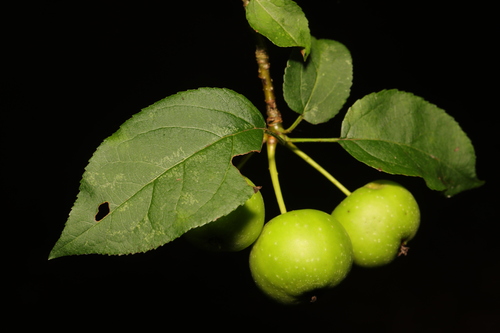
Malus sylvestris
European crab apple · also European wild apple, Crab apple, Wild apple
Report an issue with this species
Malus sylvestris, also known as the European crab apple, is a small to medium-sized deciduous tree native to western Eurasia. It typically grows in hedgerows and woodlands, producing small, tart fruit that attracts wildlife. This species played a key role in the development of modern apple cultivars.
Where it grows
Trees in each city's inventory, with the share of that city's named trees this species accounts for.
- 8,5782.8%—9.0 in
- 2,0730.18%—2.5 in
- 3130.07%35 yr1.5 in
- 1210.05%—3.1 in
- 890.18%5.8 yr—
- 730.02%42 yr5.1 in
- 340.01%42 yr9.8 in
- 190.05%—5.1 in
- 130.02%—9.8 in
- 120.00%—6.5 in
- 120.00%—6.1 in
- 90.03%—2.0 in
- 50.00%—6.5 in
- 20.00%—3.0 in
- 10.00%—8.7 in
Traits
- Foliage
- Deciduous
- Mature height
- 25–30 ft
- Canopy spread
- 22 ft
- Growth rate
- Fast
- Water needs
- Moderate
- Wildlife value
- High
- Blooms
- Mar, Apr, May
Trunk diameters across every city: median 9.0 in, mean 8.7 in, 90th percentile 21 in. Measured at breast height, as published by each inventory.
Native range
Terrestrial ecoregions where this species is native. Trees in the dataset mostly stand well outside it.
Temperate Broadleaf & Mixed Forests
- Baltic mixed forests
- Central Anatolian steppe and woodlands
- Central European mixed forests
- East European forest steppe
- European Atlantic mixed forests
- North Atlantic moist mixed forests
- Western European broadleaf forests
Temperate Conifer Forests
- Northern Anatolian conifer and deciduous forests
Other Malus in the catalogue
37 of the top 2,000 species are in this genus.


