Malus
Report an issueBy recorded trees in the inventory · identified to genus only.
Apple · also Crab apple, Crabapples, Flowering crabapple
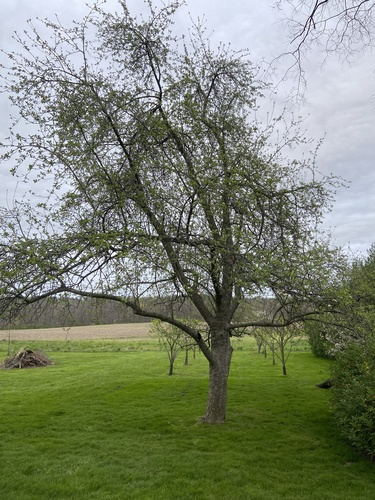
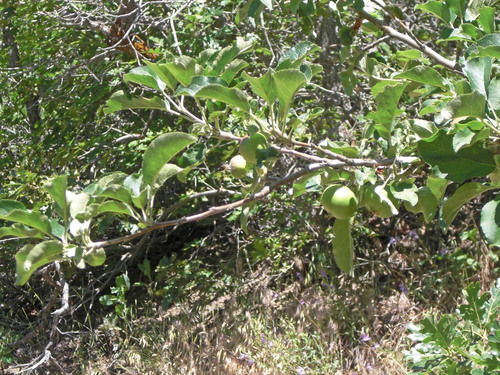
Malus is a genus of deciduous trees and shrubs known for producing apples. They typically have a rounded canopy and produce showy flowers in spring, followed by fruits in summer, providing value to wildlife. Some species demonstrate resilience to drought.
Traits
- Form & size
- FormBroadleafMature height15–50 ftCanopy spread15–25 ft
- Deciduous foliage
- Blooms
- Apr, May
- Moderate growth rate
- Sun
- Full sun, Part shade
- Soil
- Well-drained, Clay-tolerant, Loamy
- Moderate water needs
- Moderate drought tolerance
- High wildlife value
Size sketches use the middle of each recorded range (or the available bound), beside a 6 ft person. Missing dimensions are illustrative.
Trunk diameters across every city: median 4.0 in, mean 5.8 in, 90th percentile 12 in. Measured at breast height, as published by each inventory.
Where it grows
Cities that list the tree in their inventory, and what % of their named trees it represents.
- 24,9544.8%—3.5 in
- 24,4892.2%—2.4 in
- 11,9143.7%—4.3 in
- 11,1061.0%2.9 yr4.0 in
- 10,4613.9%—7.9 in
- 9,0312.9%—3.1 in
- 7,1402.1%10 yr5.5 in
- 6,5583.9%—7.0 in
- 4,2431.4%—3.0 in
- 3,7940.78%—5.0 in
- 3,5632.3%12 yr5.5 in
- 2,9756.0%—8.0 in
- 2,4990.88%29 yr5.9 in
- 2,2412.7%—7.5 in
- 2,0191.0%6.9 yr3.0 in
- 1,9770.29%—7.9 in
- 1,8681.8%——
- 1,7342.3%8.9 yr5.9 in
- 1,6503.7%—5.9 in
- 1,4563.2%16 yr5.1 in
- 1,2602.6%9.9 yr2.9 in
- 1,1839.8%5.9 yr7.0 in
- 1,1100.46%13 yr4.9 in
- 9621.3%5.6 yr4.0 in
- 8991.2%—4.7 in
- 8711.1%—9.4 in
- 8050.92%—7.0 in
- 7290.17%19 yr4.4 in
- 6941.5%—8.3 in
- 6931.6%—5.5 in
- 6580.29%—4.9 in
- 6390.35%—6.0 in
- 4807.7%—5.0 in
- 4760.19%17 yr3.9 in
- 3340.07%11 yr3.9 in
- 3260.93%—8.7 in
- 3250.33%11 yr—
- 2942.5%5.5 yr3.9 in
- 2710.10%15 yr3.0 in
- 2250.12%—6.0 in
- 2150.26%27 yr—
- 1260.21%—3.0 in
- 1040.07%—4.0 in
- 960.26%—7.0 in
- 700.03%——
- 590.03%—2.5 in
- 580.37%—7.1 in
- 490.21%—4.7 in
- 230.07%10 yr—
- 200.33%—6.3 in
- 40.02%—5.5 in
- 30.01%—1.0 in
Native range
Ecoregions where the species is native.
Temperate Broadleaf & Mixed Forests
- Western Himalayan broadleaf forests
- Appenine deciduous montane forests
- Central China Loess Plateau mixed forests
- Tarim Basin deciduous forests and steppe
Temperate Grasslands, Savannas & Shrublands
- Alai-Western Tian Shan steppe
- Kazakh forest steppe
Temperate Conifer Forests
- Western Himalayan subalpine conifer forests
Other Malus in the catalogue
38 of the top 2,000 species are in this genus.


