Morus
White mulberry · also Silkworm mulberry, Mulberry, Russian mulberry
Report an issue with this species
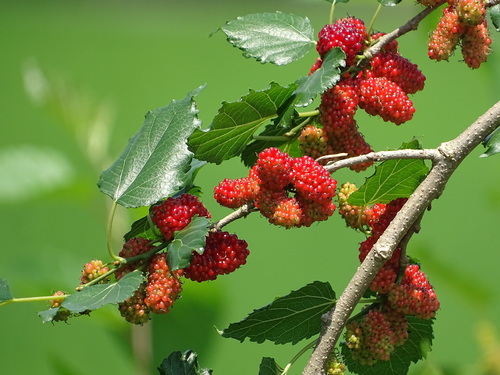
Morus alba, commonly known as white mulberry, is a fast-growing tree native to China. It is known for its messy fruit that attracts wildlife and can stain surfaces, and is considered a noxious weed in some areas. The species tolerates drought and various environmental conditions, thriving in moist, well-drained soils.
Where it grows
Trees in each city's inventory, with the share of that city's named trees this species accounts for.
- 2,2360.31%—15 in
- 1,7400.25%—7.9 in
- 5210.19%—6.3 in
- 3360.45%—11 in
- 2790.09%—3.5 in
- 1050.03%—3.0 in
- 870.04%—8.8 in
- 360.03%—11 in
- 330.01%—5.9 in
- 290.02%5.8 yr1.9 in
- 130.00%—4.0 in
- 130.00%17 yr7.9 in
- 110.00%—3.9 in
- 50.00%—4.4 in
- 50.02%—15 in
- 40.01%—9.3 in
- 40.03%—20 in
- 10.00%——
Traits
- Foliage
- Deciduous
- Mature height
- 30–50 ft
- Canopy spread
- 30–50 ft
- Growth rate
- Fast
- Sun
- Full sun
- Soil
- Moist, Well-drained
- Water needs
- Moderate
- Drought tolerance
- Moderate
- Wildlife value
- High
- Blooms
- Mar, Apr, May
Trunk diameters across every city: median 9.8 in, mean 12 in, 90th percentile 24 in. Measured at breast height, as published by each inventory.
Native range
Terrestrial ecoregions where this species is native. Trees in the dataset mostly stand well outside it.
Tropical & Subtropical Moist Broadleaf Forests
- East Deccan moist deciduous forests
- Hainan Island monsoon rain forests
- Nansei Islands subtropical evergreen forests
- South China Sea Islands
Tropical & Subtropical Dry Broadleaf Forests
- East Deccan dry-evergreen forests
Tropical & Subtropical Coniferous Forests
- Northeast India-Myanmar pine forests
Temperate Broadleaf & Mixed Forests
- Central China Loess Plateau mixed forests
Other Morus in the catalogue
5 of the top 2,000 species are in this genus.


