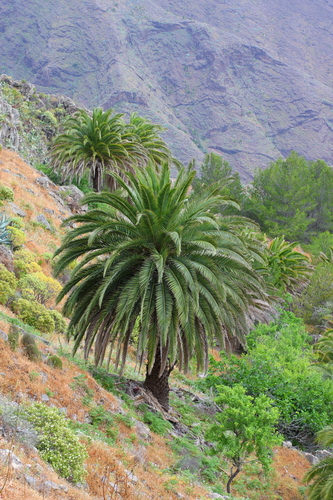
Phoenix canariensis
Canary Island date palm · also Canary Island palm, Canary palm, Canary date palm
Report an issue with this species
The Canary Island date palm is a large, evergreen palm with a thick trunk, feather-shaped fronds, and orange, inedible fruits. Native to the Canary Islands, it is commonly cultivated but considered a high-risk invasive species in some regions like Hawai‘i.
Where it grows
Trees in each city's inventory, with the share of that city's named trees this species accounts for.
- 5,4691.2%29 yr30 in
- 3,1310.21%——
- 6350.18%—8.3 in
- 5920.44%—30 in
- 2050.13%—7.5 in
- 800.30%—22 in
- 480.59%——
- 210.01%—22 in
- 30.00%—6.9 in
- 26.7%——
- 10.00%—4.9 in
Traits
- Form
- Palm
- Foliage
- Evergreen
- Mature height
- 50–60 ft
- Canopy spread
- 40 ft
- Growth rate
- Fast
- Water needs
- Low
- Drought tolerance
- High
- Wildlife value
- Moderate
- Blooms
- Mar, Apr, May
Trunk diameters across every city: median 30 in, mean 26 in, 90th percentile 32 in. Measured at breast height, as published by each inventory.
Native range
Terrestrial ecoregions where this species is native. Trees in the dataset mostly stand well outside it.
Mediterranean Forests, Woodlands & Scrub
- Canary Islands dry woodlands and forests
Other Phoenix in the catalogue
8 of the top 2,000 species are in this genus.


