Phoenix dactylifera
Date palm · also Date
Report an issue with this species
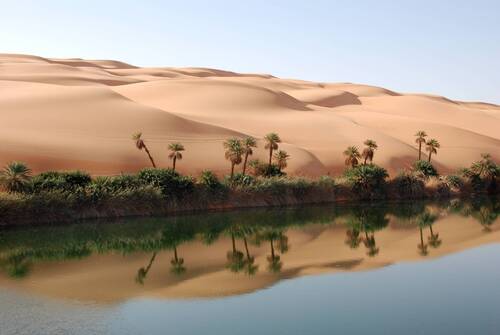
The Date Palm is a solitary palm with a massive erect trunk that can reach up to 98 feet tall. Native to arid regions from the Gulf States to Pakistan, it is widely cultivated for its edible fruit and is emblematic of oasis agriculture. It is a slow-growing, long-lived species tolerant of coastal conditions and drought.
Where it grows
Trees in each city's inventory, with the share of that city's named trees this species accounts for.
- 5200.03%——
- 2310.88%—16 in
- 1250.03%29 yr15 in
- 560.04%—18 in
- 110.00%—15 in
- 30.00%—2.5 in
- 10.01%——
- 10.00%—9.4 in
- 10.01%—11 in
Traits
- Form
- Palm
- Foliage
- Evergreen
- Mature height
- 50–98 ft
- Canopy spread
- 20–40 ft
- Lifespan
- 100 years
- Growth rate
- Slow
- Water needs
- Low
- Drought tolerance
- High
- Wildlife value
- Moderate
- Tolerates
- coastal, salt
- Blooms
- Mar, Apr, May, Jun, Jul, Aug
Trunk diameters across every city: median 16 in, mean 17 in, 90th percentile 24 in. Measured at breast height, as published by each inventory.
Native range
Terrestrial ecoregions where this species is native. Trees in the dataset mostly stand well outside it.
Deserts & Xeric Shrublands
- Arabian desert
- Arabian sand desert
- Arabian-Persian Gulf coastal plain desert
- North Arabian desert
- Registan-North Pakistan sandy desert
- South Iran Nubo-Sindian desert and semi-desert
Other Phoenix in the catalogue
8 of the top 2,000 species are in this genus.


