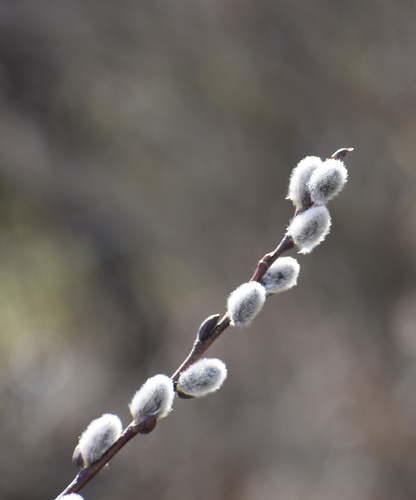
Salix discolor
American pussy willow · also Glaucous willow, Pussy willow, Purple willow
Report an issue with this species
Salix discolor is a weak-wooded deciduous shrub or small tree growing up to 25 ft tall. It produces soft, silky catkins in early spring before its leaves emerge. This species requires ample water and branches are often cut for flower arrangements.
Where it grows
Trees in each city's inventory, with the share of that city's named trees this species accounts for.
- 1040.01%—8.7 in
- 380.01%—6.5 in
- 340.01%—15 in
- 280.01%—3.0 in
- 230.01%35 yr1.5 in
- 50.00%—3.0 in
- 50.01%—5.9 in
- 40.01%—4.5 in
- 40.02%—10 in
- 30.00%—16 in
- 20.00%——
- 20.00%—3.5 in
- 20.00%—8.0 in
- 10.01%—8.3 in
Traits
- Foliage
- Deciduous
- Mature height
- 15–25 ft
- Canopy spread
- 12–15 ft
- Growth rate
- Fast
- Water needs
- High
- Drought tolerance
- Low
- Blooms
- Mar, Apr
Trunk diameters across every city: median 6.7 in, mean 9.4 in, 90th percentile 19 in. Measured at breast height, as published by each inventory.
Native range
Terrestrial ecoregions where this species is native. Trees in the dataset mostly stand well outside it.
Temperate Conifer Forests
- Alberta-British Columbia foothills forests
- British Columbia coastal conifer forests
- Central British Columbia Mountain forests
- Colorado Rockies forests
- Northern Pacific Alaskan coastal forests
- Northern Rockies conifer forests
Temperate Broadleaf & Mixed Forests
- Eastern Canadian Forest-Boreal transition
- Eastern Great Lakes lowland forests
- New England-Acadian forests
- Western Great Lakes forests
Other Salix in the catalogue
34 of the top 2,000 species are in this genus.


