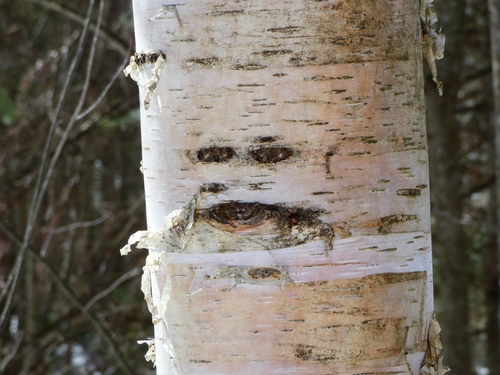
Betula papyrifera
Paper birch · also American white birch, Canoe birch, White birch
Report an issue with this species
Paper birch is a short-lived, deciduous tree native to northern North America, known for its distinctive white, peeling bark. It is a pioneer species that rapidly colonizes disturbed areas and serves as an important food source for moose and other wildlife. While valued as an ornamental tree, it is not drought-tolerant and performs poorly in hot, humid conditions.
Where it grows
Trees in each city's inventory, with the share of that city's named trees this species accounts for.
- 8,5311.2%—12 in
- 3,3380.69%9.4 yr3.1 in
- 2,0340.63%—7.9 in
- 2,0310.39%—6.3 in
- 1,7620.15%—2.1 in
- 1,0420.34%—9.8 in
- 1,0250.38%—8.7 in
- 9591.3%—9.3 in
- 8190.52%—9.1 in
- 8030.24%3.4 yr3.1 in
- 7661.0%—12 in
- 6221.8%—12 in
- 3580.05%—6.0 in
- 2900.16%—16 in
- 2590.55%—10 in
- 1990.07%35 yr9.8 in
- 1780.21%—8.7 in
- 1771.5%—7.9 in
- 1620.14%23 yr9.2 in
- 1340.30%14 yr3.5 in
- 1300.29%—12 in
- 680.03%—6.9 in
- 430.01%25 yr7.6 in
- 340.01%—3.0 in
- 320.04%—9.8 in
- 300.01%35 yr7.5 in
- 260.22%—14 in
- 180.11%3.0 yr0.4 in
- 140.03%45 yr—
- 60.03%—4.5 in
Traits
- Foliage
- Deciduous
- Mature height
- 40–45 ft
- Canopy spread
- 25–35 ft
- Growth rate
- Fast
- Drought tolerance
- Low
- Wildlife value
- High
- Blooms
- Apr, May
Trunk diameters across every city: median 8.7 in, mean 9.7 in, 90th percentile 19 in. Measured at breast height, as published by each inventory.
Native range
Terrestrial ecoregions where this species is native. Trees in the dataset mostly stand well outside it.
Temperate Broadleaf & Mixed Forests
- Eastern Canadian Forest-Boreal transition
- Eastern Great Lakes lowland forests
- New England-Acadian forests
- Western Great Lakes forests
Temperate Grasslands, Savannas & Shrublands
- Montana Valley and Foothill grasslands
- Nebraska Sand Hills mixed grasslands
Temperate Conifer Forests
- Colorado Rockies forests
Other Betula in the catalogue
20 of the top 2,000 species are in this genus.


