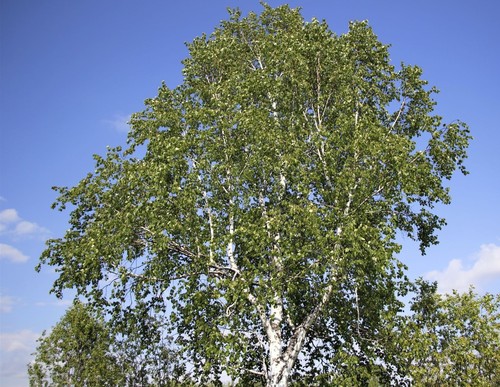
Betula platyphylla
Asian white birch · also Japanese white birch
Report an issue with this species
Betula platyphylla is a large deciduous tree known for its slightly pendulous branches and striking white bark that fissures with age. It thrives in moist, well-drained soils in cooler climates and grows rapidly in its early years, acting as an effective pioneer species. This species shows poor drought tolerance but is resistant to the bronze birch borer, making it a valuable landscape choice where this pest is a concern.
Where it grows
Trees in each city's inventory, with the share of that city's named trees this species accounts for.
- 4020.08%—2.0 in
- 3850.08%4.4 yr2.4 in
- 320.07%10 yr2.4 in
- 260.01%3.3 yr2.0 in
- 180.01%—2.4 in
- 150.00%54 yr15 in
- 120.00%—12 in
- 50.00%—3.0 in
- 30.00%—9.4 in
- 20.00%——
- 20.00%—6.3 in
- 10.00%—52 in
- 10.00%—44 in
- 10.00%—9.8 in
Traits
- Foliage
- Deciduous
- Mature height
- 40–50 ft
- Canopy spread
- 20–25 ft
- Growth rate
- Fast
- Drought tolerance
- Low
- Wildlife value
- Moderate
Trunk diameters across every city: median 2.4 in, mean 2.7 in, 90th percentile 3.1 in. Measured at breast height, as published by each inventory.
Native range
Terrestrial ecoregions where this species is native. Trees in the dataset mostly stand well outside it.
Temperate Conifer Forests
- Alberta-British Columbia foothills forests
- British Columbia coastal conifer forests
- Central British Columbia Mountain forests
- Northern Pacific Alaskan coastal forests
Temperate Broadleaf & Mixed Forests
- Northeast China Plain deciduous forests
- Southern Korea evergreen forests
- Western Siberian hemiboreal forests
Boreal Forests/Taiga
- Northwest Territories taiga
Other Betula in the catalogue
20 of the top 2,000 species are in this genus.


