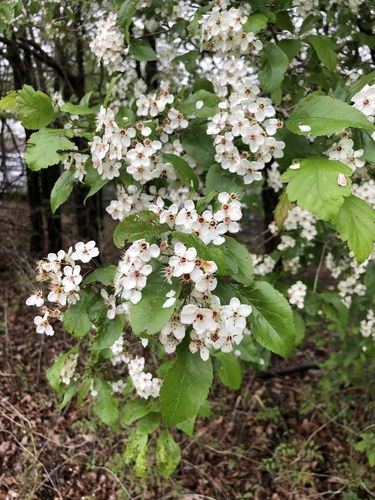
Crataegus viridis
Green hawthorn · also Southern thorn, Green haw, Southernthorn
Report an issue with this species
Crataegus viridis is a small flowering deciduous tree native to the southeastern United States, notably resistant to leaf rust. It features glossy, deep green leaves that turn yellow, red, and burgundy in fall, small white blooms, and winter fruits that attract birds. This species tolerates urban pollution, light shade, drought, and fire, making it suitable for urban planting.
Where it grows
Trees in each city's inventory, with the share of that city's named trees this species accounts for.
- 9200.13%—2.4 in
- 1540.05%—3.0 in
- 970.05%1.6 yr2.0 in
- 860.12%5.8 yr1.6 in
- 470.04%5.8 yr2.0 in
- 230.19%4.8 yr2.0 in
- 180.00%—3.0 in
- 20.00%——
- 10.00%—16 in
Traits
- Foliage
- Deciduous
- Mature height
- 20–40 ft
- Canopy spread
- 20–30 ft
- Growth rate
- Moderate
- Sun
- Full sun, Part shade
- Water needs
- Moderate
- Drought tolerance
- High
- Pollution tolerance
- High
- Wildlife value
- High
- Fire risk
- Low
- Blooms
- Mar, Apr, May
Trunk diameters across every city: median 2.4 in, mean 2.9 in, 90th percentile 3.1 in. Measured at breast height, as published by each inventory.
Native range
Terrestrial ecoregions where this species is native. Trees in the dataset mostly stand well outside it.
Temperate Broadleaf & Mixed Forests
- Mississippi lowland forests
Other Crataegus in the catalogue
29 of the top 2,000 species are in this genus.


