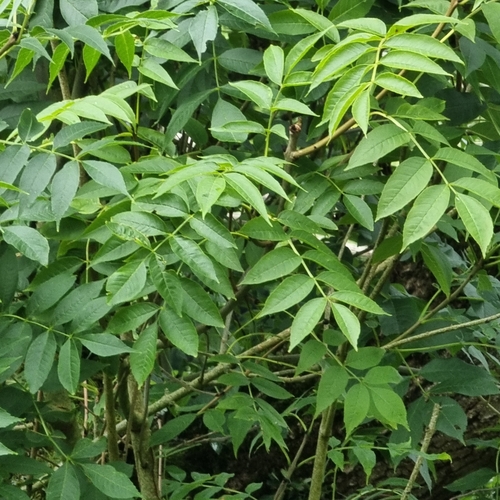
Fraxinus excelsior
Ash · also European ash, Common ash
Report an issue with this species
Fraxinus excelsior is a deciduous tree growing up to 40m tall, characterized by grey, hairless branches and dark green leaves. It produces inconspicuous, wind-pollinated flowers in April, followed by winged fruits known as "keys." This species is valued for its strong, elastic timber and tolerates urban pollution and exposed sites, but faces significant threats from ash dieback and the Emerald Ash Borer.
Where it grows
Trees in each city's inventory, with the share of that city's named trees this species accounts for.
- 52,4164.6%—3.8 in
- 16,8855.9%43 yr16 in
- 9,8392.3%35 yr8.8 in
- 8,8222.5%—11 in
- 3,6191.6%—9.4 in
- 1,3610.74%—17 in
- 1,3532.8%43 yr2.4 in
- 6180.09%—19 in
- 5470.17%—15 in
- 4120.56%—16 in
- 3030.11%—17 in
- 810.11%—4.7 in
- 790.50%28 yr11 in
- 500.03%—3.8 in
- 450.03%—20 in
- 270.06%—23 in
- 230.20%—3.9 in
- 180.01%50 yr13 in
- 170.05%—15 in
- 130.01%23 yr47 in
- 30.00%—11 in
- 20.00%—9.0 in
- 10.01%—17 in
Traits
- Form
- Broadleaf
- Foliage
- Deciduous
- Mature height
- 50–80 ft
- Canopy spread
- 60–75 ft
- Growth rate
- Fast
- Sun
- Full sun, Part shade
- Water needs
- Moderate
- Drought tolerance
- Moderate
- Pollution tolerance
- High
- Wildlife value
- Moderate
- Blooms
- Apr
Trunk diameters across every city: median 5.6 in, mean 7.7 in, 90th percentile 16 in. Measured at breast height, as published by each inventory.
Native range
Terrestrial ecoregions where this species is native. Trees in the dataset mostly stand well outside it.
Temperate Broadleaf & Mixed Forests
- Baltic mixed forests
- Caucasus mixed forests
- Central European mixed forests
- East European forest steppe
- European Atlantic mixed forests
- Western European broadleaf forests
Mediterranean Forests, Woodlands & Scrub
- Aegean and Western Turkey sclerophyllous and mixed forests
Other Fraxinus in the catalogue
20 of the top 2,000 species are in this genus.


